A full pensioner who uses the entire high-tier home-modification allocation of $15,390 would contribute $769.50 at the official 5 per cent rate. A self-funded retiree without a Commonwealth Seniors Health Card would contribute $7,695, or 50 per cent. Those rates, and the $513, $2,052 and $15,390 caps, are on My Aged Care's costs and contributions page, last updated on 1 October 2026, for people commencing on or after 1 July 2026. The high-tier figure is also a lifetime cap for home modifications, so the contribution and the cap need to be read together before anyone books a bathroom redesign.
What counts as a home modification, and who prescribes it?
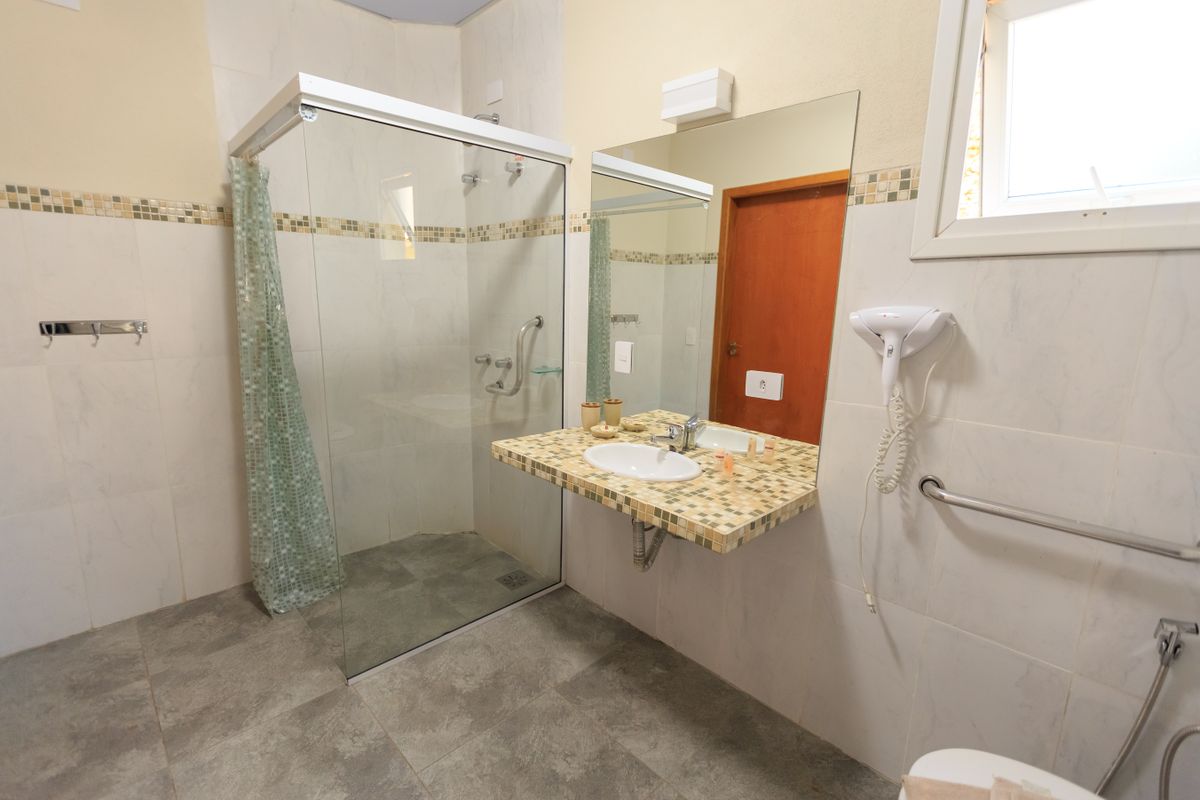
A home modification is a change to the building, not a piece of equipment you can pick up and take with you. My Aged Care lists examples such as lever tap sets and lever door handles, grab rails in a shower or bathroom, internal and external handrails, ramps and stair lifts, and non-slip materials for floors and stairs. The Department of Health, Disability and Ageing's scheme page also includes bathroom redesign, and widening doorways and passages for wheelchair access.
Assistive technology is different. Walking frames, shower chairs, commodes and non-slip mats sit in that group. The National Disability Insurance Scheme makes the same distinction: a non-slip mat is assistive technology, while a non-slip floor treatment applied by an installer is a home modification. Under Support at Home, the two have separate budgets, even though they are administered under the same scheme.
All home modifications under the AT-HM scheme must be prescribed by an occupational therapist. Your Support at Home provider arranges that assessment, gets your agreement to proceed, and coordinates installation with a qualified person. The funding can also cover associated services such as trade work, building approvals, plan drafting, council fees, and asbestos or demolition costs, if they are needed for the prescribed work. General renovations, repairs and cosmetic upgrades are not what the scheme is for.

Official Support at Home caps from 1 July 2026
Support at Home replaced the Home Care Packages Program from 1 November 2025. Assistive technology and home modifications are funded up front, and separately from your ongoing quarterly services budget, so you do not have to save ordinary care funds to pay for a ramp.
My Aged Care's table, current for people commencing on or after 1 July 2026, sets the same three caps for each stream: $513 (low), $2,052 (medium) and $15,390 (high). The access period is 12 months in most cases. Complex home modifications can be extended for another 12 months, to 24 months in total, if you and your provider show Services Australia that the work has started. Older people with specified progressive conditions can hold assistive technology funding for 24 months, and may extend that to 48 months. Assistance dog maintenance is listed separately at $2,052 a year, and does not accrue or roll over.
The two high caps do not behave the same way. Assistive technology above $15,390 can be approved where there is a prescribed need, with a quote and a valid prescription. High-tier home modifications are capped at $15,390 per lifetime. That lifetime rule is stated on the Department's scheme page, which still describes the unindexed $15,000 figure used when the scheme was first set out. The indexed My Aged Care amounts are the ones to use for commencements from 1 July 2026. Low and medium home-modification tiers may be approved again if a later assessment shows a new need.
If the approved tier is not enough, the provider can request a support plan review and put in evidence. That review can move you between tiers. It does not turn the lifetime high-tier home-modification cap into an open-ended building budget. People who transitioned from a Home Care Package must use any unspent Commonwealth package funds on AT-HM items first, before the provider claims against a new AT-HM allocation.

How much do you contribute?
The cap is not the same as your out-of-pocket cost, and it is not a fixed price for the job. Providers set their prices. The government contribution and your contribution then share the cost of approved items.
On My Aged Care's contribution table, AT-HM items are treated like the independence category. A full pensioner contributes 5 per cent. A part-pensioner, or a self-funded retiree who holds a Commonwealth Seniors Health Card, pays a tapered rate between 5 and 50 per cent, based on the income and assets assessment. A self-funded retiree who is not eligible for that card, or anyone given a "means not disclosed" status, contributes 50 per cent. Prescriptions and wraparound services are clinical supports, so the contribution on those is 0 per cent. Occupational therapy that is billed as a prescription should not attract a co-payment.
Applied to a full high-tier allocation of $15,390, those official rates are only an illustration, not a quote. A full pensioner contributing 5 per cent would pay $769.50, with the government meeting $14,620.50. A self-funded retiree at the 50 per cent rate would pay $7,695. On a medium allocation of $2,052 the same rates are $102.60 and $1,026. On a low allocation of $513 they are $25.65 and $256.50.
In Modified Monash Model areas 6 or 7, a remote supplement may also apply, and a high-tier home-modification contribution is charged on only 66.6 per cent of the total cost. On a $15,390 allocation, 66.6 per cent is $10,249.74, so a 5 per cent contribution is $512.49 and a 50 per cent contribution is $5,124.87.
If you were approved for a Home Care Package on or before 12 September 2024, different "no worse off" rules can apply, including a lifetime contribution cap of $88,934.57 as at 20 September 2026. Use the Support at Home fee estimator and your Services Australia letter for your own figures.
NDIS and DVA funding, and what they will not top up
Other programs can sit beside, or instead of, Support at Home, but they are not automatic top-ups of the $15,390 cap.
The NDIS can fund home modifications where they are reasonable and necessary, relate to your disability, help you take part in daily life, and are not more appropriately funded by another service. Funding is only available for a home you own, or a home whose owner agrees can be modified. The NDIS describes simple home adaptations as changes that cost less than $1,500 each, and says they are usually funded as low-cost assistive technology. Minor modifications do not affect the structure. Complex modifications do, or they need custom or more technical work. For a new build, the Scheme may consider the extra cost of a disability-specific feature, such as a wider doorway, over a standard one. It is unlikely to fund extra earthworks because you chose a sloping block, or a lift because you chose a two-storey design.
Eligible veterans can obtain fully funded aids, equipment and home modifications through the Department of Veterans' Affairs Rehabilitation Appliances Program, last updated on 10 August 2026. You need a Veteran Card for all conditions, or a card for specific conditions, and an assessed clinical need prescribed by an appropriate health professional. DVA notes that people aged 65 or over (or 50 or over for Aboriginal and Torres Strait Islander people, and for people who are homeless or at risk) can also apply for an aged care assessment through My Aged Care, provided services are not duplicated.
Queensland's Home Assist Secure for minor work
In Queensland, Home Assist Secure offers advice, referrals and a subsidy for critical minor maintenance, repairs and minor modifications such as grab rails and easy-turn taps. The official subsidy, on a page last updated on 9 June 2026, is labour costs up to $200 per job and $500 per year, and only for jobs that cost $1,500 or less in labour and materials combined. Unused subsidies expire each year. You must be 60 or older, or any age with a disability, hold a Pensioner Concession Card, and be unable to do the work safely yourself. People who are already eligible for Support at Home, the Commonwealth Home Support Program, the Queensland Community Support Scheme or Veterans' Home Care are not eligible for the subsidy unless exceptional circumstances apply. Renters also cannot use it for work that the property owner must do by law. Call 13QGOV (13 74 68) or your local provider to check the rules in your suburb, including whether any remaining smoke-alarm subsidy is still available in that area. The program is a safety net for small, critical jobs, not a second fund for a bathroom redesign already refused or capped under Support at Home. If you are already on one of those funded programs, ask that provider about minor rails and taps before you apply to Home Assist Secure.

New homes, livable housing design and when moving is wiser
New houses and apartments are being built to a higher minimum than older stock. The National Construction Code's livable housing design provisions, in NCC 2025 Volume One Part G7 and Volume Two Part H8, work with the ABCB Standard for Livable Housing Design. For a Class 1a house, that pathway covers dwelling access and entrance, internal doors and corridors, a sanitary compartment and shower, and reinforcement of bathroom walls so grab rails can be added later. Class 2 apartments follow a similar internal standard, with building access dealt with under other disability-access rules. The Code is a minimum, not a full wheelchair-accessible design, and it does not require an existing house to be retrofitted just because the rules for new work have changed.
That gap matters when a quote for a stair lift or a full bathroom redesign uses, or exceeds, the $15,390 lifetime cap. If the house has narrow halls, a steep front stair, or a bathroom that cannot be reconfigured without major structural work, the occupational therapist's report should say so plainly. At that point, staying may cost more than the scheme will meet.
Some people then compare the cost of the gap with the cost of moving to a home that already has a step-free entry, a shower you can walk into, and a bedroom and toilet on the same level. On the Sunshine Coast, Danielle Young Properties is a local agency that offers a free market appraisal if you need a current value for the house you already have, before you decide whether to modify it or sell. That is a property question, not a substitute for the clinical prescription.
How to sequence the work
Start with an aged care assessment through My Aged Care, or with your NDIS or DVA pathway if that is the scheme you already use. If Support at Home approves an AT-HM tier, the approval appears in your Notice of Decision and support plan. You can use AT-HM funding once it is allocated and a provider is in place, even if you are still waiting for ongoing service funds.
Ask the occupational therapist to separate urgent, lower-cost work from structural work. A low or medium tier may cover rails and lever handles without touching the lifetime high cap. Save the high-tier allocation for work that truly needs it, and get itemised quotes that match the prescription. Confirm what is on the AT-HM list, and what is excluded as a usual household expense.
If you are a renter, get the owner's written agreement before anything is fixed to the building. If you live with family, be clear about who owns the property and who will keep the modifications if you move. Keep invoices and proof of installation, because providers must retain them. And if the house cannot be made safe within the funding you can actually access, treat that as a result of the assessment, not a failure of the process.
Funding figures at a glance
The tables below use official caps and contribution rates. They are a reading aid, not a substitute for your Notice of Decision or a provider quote.
| AT-HM stream and tier | Allocation cap | Period |
|---|---|---|
| Assistive technology, low | $513 | 12 months |
| Assistive technology, medium | $2,052 | 12 months |
| Assistive technology, high | $15,390 (more can be approved with evidence) | 12 months |
| Home modifications, low | $513 | 12 months |
| Home modifications, medium | $2,052 | 12 months |
| Home modifications, high | $15,390 (lifetime cap) | 12 months, extendable to 24 |
| Assistance dog maintenance | $2,052 a year | Does not roll over |
Source: My Aged Care, last updated 1 October 2026, for people commencing on or after 1 July 2026.
| If the full allocation is used | Full pensioner (5%) | Self-funded, no CSHC, or means not disclosed (50%) |
|---|---|---|
| Low, $513 | $25.65 | $256.50 |
| Medium, $2,052 | $102.60 | $1,026.00 |
| High, $15,390 | $769.50 | $7,695.00 |
| High in MM 6 or 7, contribution on 66.6% ($10,249.74) | $512.49 | $5,124.87 |
These contribution amounts are calculated from the official rates. Prescriptions and wraparound services are 0 per cent. Your Services Australia letter is the figure that applies to you.
| Other official programs | What they can cover, if you are eligible |
|---|---|
| NDIS home modifications | Disability-related changes, with owner consent. Simple adaptations under $1,500 each are usually treated as low-cost assistive technology. |
| DVA Rehabilitation Appliances Program | Fully funded prescribed aids, equipment and home modifications for eligible veterans. |
| Queensland Home Assist Secure | Labour subsidy up to $200 per job and $500 a year, for minor work on jobs of $1,500 or less. Not generally available if you already have Support at Home or similar funded programs. |
Key takeaways
My Aged Care, last updated on 1 October 2026, sets AT-HM caps at $513, $2,052 and $15,390 for commencements from 1 July 2026. Home modifications and assistive technology are funded separately.
High-tier home modifications are a lifetime cap. Assistive technology above $15,390 can be approved with evidence. An occupational therapist must prescribe all home modifications under the scheme, and you pay no contribution on that prescription.
Full pensioners contribute 5 per cent of AT-HM items. Self-funded retirees without a Commonwealth Seniors Health Card contribute 50 per cent. A quote above the lifetime cap is not automatically topped up.
Check NDIS, DVA and, in Queensland, Home Assist Secure only if you are eligible. If the house cannot be made safe within the funding you can access, compare that result with the cost of moving.
Sources
- My Aged Care, Support at Home costs and contributions, last updated 1 October 2026.
- My Aged Care, Assistive Technology and Home Modifications (AT-HM) scheme.
- Department of Health, Disability and Ageing, Assistive Technology and Home Modifications (AT-HM) scheme.
- NDIS, Guide to home modifications.
- Department of Veterans' Affairs, Getting aids, equipment and home modifications, last updated 10 August 2026.
- Queensland Government, Help with home maintenance and repairs (Home Assist Secure), last updated 9 June 2026.
- Queensland Government, Home modifications.
- Australian Building Codes Board, Livable housing design.
- Danielle Young Properties, Company profile and free market appraisal.