Pregnancy ultrasounds are routinely offered in Australia. They are not compulsory. RANZCOG's 2024 guideline recommends offering two scans for anomaly screening: one at 11 to 14 weeks, and a second at 18 to 22 weeks. If the gestational age is uncertain, a dating scan may come earlier.
From 1 July 2026, Medicare's 85% benefit is $60.10 for a referred dating scan under 12 weeks (item 55700), $70.15 for a nuchal translucency scan (item 55707), and $100.20 for a 17 to 22 week morphology scan (item 55706) or a growth scan after 22 weeks (item 55718). Private clinics often charge more, so you may still face a gap.
What a pregnancy ultrasound is, and whether it is safe
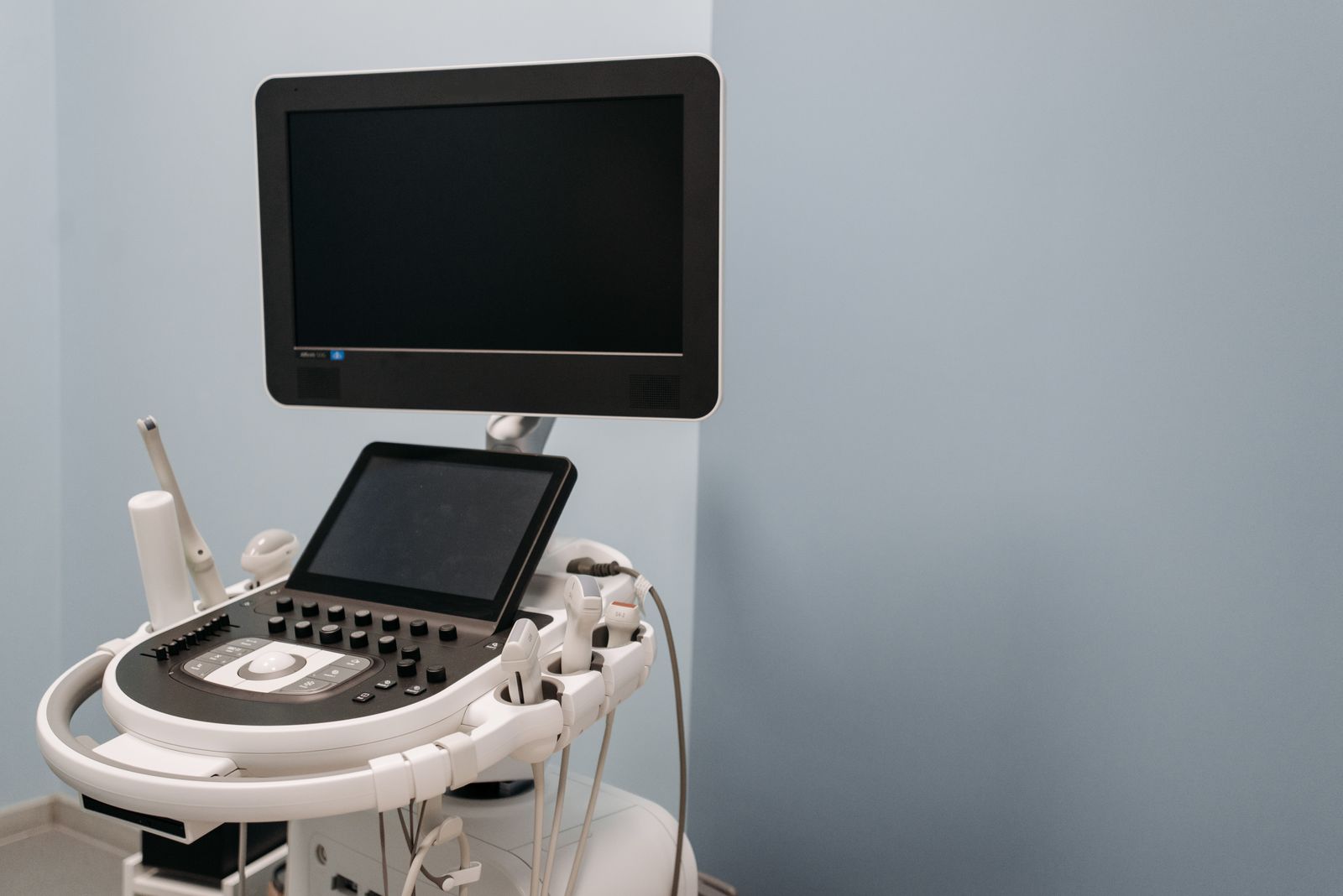
Pregnancy, Birth and Baby, last reviewed in February 2026, describes ultrasound as a very safe procedure that uses sound waves to create images of the baby. "No needles or radiation are used." The sonographer puts gel on the abdomen, then moves a handheld transducer over the skin. Sound waves bounce back and a computer turns the echoes into pictures.
"Ultrasound is a safe and pain-free test," the same page says. "There is no increased risk of miscarriage or harm to your baby." The sound waves are low frequency. Unlike an X-ray, ultrasound does not use radiation. Inside Radiology makes the same point about the 18 to 20 week screening scan: "It is a test that has no ionising radiation."
Early in pregnancy, when the baby is still very small, a transvaginal scan may be needed for a clearer view. Pregnancy, Birth and Baby says this is more likely in the first trimester. The clinic should explain the approach when you book.
When are scans offered?
Several scans are routinely recommended. Whether you have each one is still your decision.
RANZCOG's routine antenatal assessment statement (C-Obs 3b) says all women should be advised to see a suitable health professional by 10 weeks. Where gestational age is uncertain, a dating ultrasound may be organised. "If the pregnancy is low risk there is no need for an ultrasound before 12 weeks'." All women should be offered an obstetric ultrasound before 20 weeks. "An ultrasound for fetal morphology and placental localisation is recommended usually at 20 weeks gestation."
The later C-Obs 35 guideline is more specific about anomaly screening. Recommendation 11 is that "all pregnant women should be offered two ultrasounds for fetal anomaly screening, one at 11-14 weeks gestation and a second one at 18-22 weeks gestation as it improves the timely detection of fetal anomalies." A Department of Health pregnancy timeline fact sheet, updated in 2025, says that between 16 and 19 weeks you should be offered an appointment that includes an offer of a fetal anatomy or morphology scan "to be carried out at 18-20 weeks."
Healthdirect lists a dating scan, usually at 8 to 14 weeks, a nuchal translucency test at 11 to 13 weeks, combined first-trimester screening at 11 to 14 weeks, and a morphology scan at 18 to 22 weeks. Non-invasive prenatal testing (NIPT) is a blood test from 10 weeks, not an ultrasound.

Dating and early pregnancy scans
If needed, a dating scan is usually done in the first trimester, though Pregnancy, Birth and Baby says it can be done later. It estimates the due date, checks whether there is one baby or more, and checks that the pregnancy is not ectopic.
On the Medicare Benefits Schedule, the usual referred (R-type) item for this scan is 55700, when "the dating of the pregnancy (as confirmed by the current ultrasound) is less than 12 weeks of gestation." The item is for determining "the gestation, location, viability or number of fetuses." The schedule fee, updated on 1 July 2026, is $70.65. The 85% benefit, the usual outpatient rebate, is $60.10. The 75% benefit is $53.00. The Extended Medicare Safety Net cap is $40.70. Item 55700 cannot be billed if one of a listed set of later obstetric ultrasound items is performed on the same patient within 24 hours.
A low-risk pregnancy does not automatically need a scan before 12 weeks, RANZCOG notes. Early scans are still used when dates are uncertain, or when there is bleeding, pain, a previous ectopic pregnancy, or other clinical reasons. Vision XRAY's obstetric ultrasonography page lists similar first-trimester indications, including threatened or recurrent miscarriage, pelvic pain, hyperemesis and a previous ectopic pregnancy.
The 11 to 14 week scan and nuchal translucency
The first-trimester screening window is tight. Pregnancy, Birth and Baby says the nuchal translucency (NT) scan is done after 11 weeks and before 14 weeks. The NT is a fluid measurement at the back of the baby's neck, used as part of a screen for chromosomal conditions such as Down syndrome.
Inside Radiology says the NT is measured on an abdominal ultrasound "from 11 weeks 4 days of foetal age to 13 weeks 6 days." Vision XRAY describes a similar window of 11 weeks and 3 days to 13 weeks and 6 days. Item 55707 applies when the pregnancy "is dated by a fetal crown rump length of 45 to 84 mm" and "nuchal translucency measurement is performed to assess the risk of fetal abnormality." From 1 July 2026 the schedule fee is $82.50, with an 85% benefit of $70.15 and a 75% benefit of $61.90. The Extended Medicare Safety Net cap is $47.70.
Inside Radiology says the scan also checks the size of the fetus, the heart rate, general anatomy, and how many fetuses are present. A blood test of the mother's pregnancy hormone levels is combined with the NT and her age to give a "combined risk." "Without the blood test, screening is 75% accurate for predicting Down syndrome. With the blood test, the accuracy increases to 85%." A higher-chance result is not a diagnosis. Women in that group "will be offered formal genetic testing using other procedures, such as amniocentesis or chorion villus sampling (CVS)."
NIPT is a blood test from 10 weeks, not an ultrasound. Pregnancy, Birth and Baby says it "can identify about 99% of babies with Down syndrome," also screens for other conditions, and "You need to pay a fee to have this test." RANZCOG's good practice point is that an early pregnancy scan should confirm dating, multiple pregnancy and a live fetus before NIPT. Neither test replaces the later morphology scan.
Item 55704 covers a referred fetal anatomy scan at 12 to 16 weeks, with the same $82.50 schedule fee and $70.15 (85%) benefit as item 55707.
The morphology scan at 18 to 22 weeks
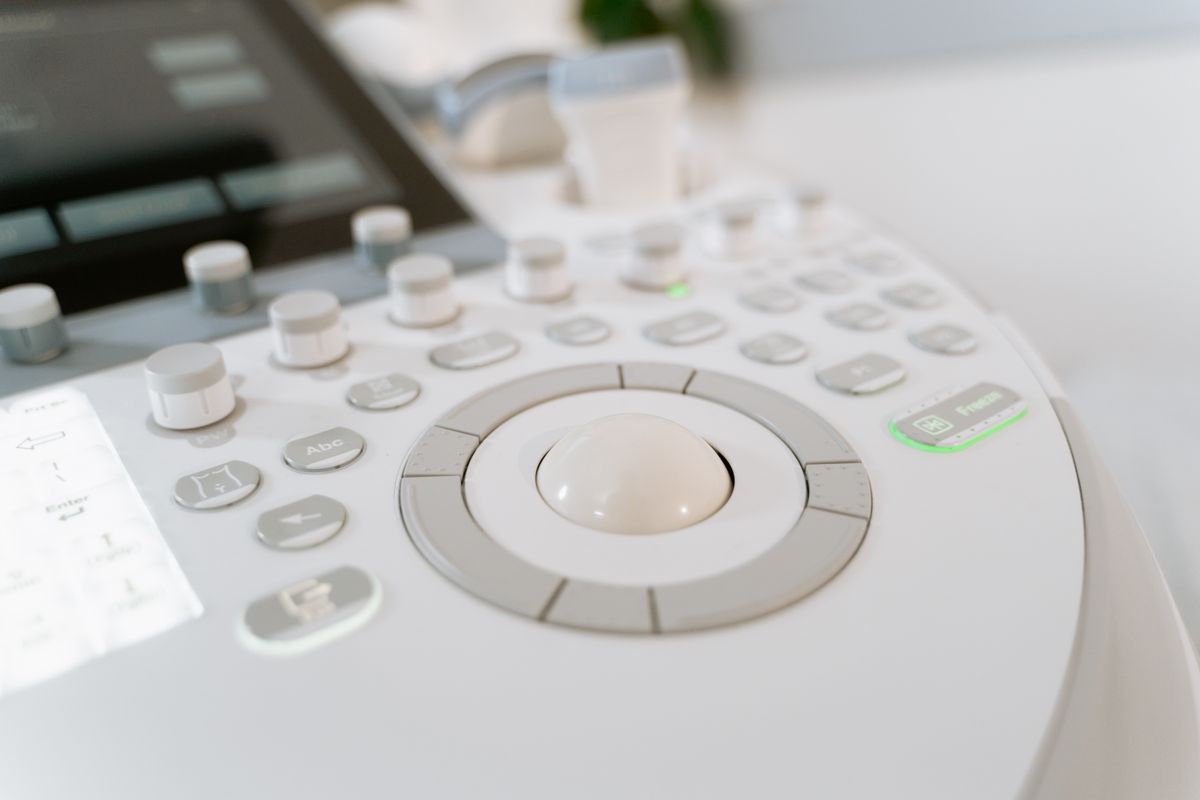
This is the detailed mid-pregnancy scan. Pregnancy, Birth and Baby says a morphology scan is "usually ideally done at 20 weeks (between 18 and 22 weeks)." It checks the structure and growth of the baby's organs, heart rate and rhythm, the position of the placenta, and the length of the cervix. You can usually find out the sex of the baby if you want to know.
Inside Radiology's consumer page describes an 18 to 20 week screening ultrasound as part of routine pregnancy care, because the fetus is big enough for its body structure and development to be assessed. It also confirms the number of fetuses, dating, the position of the placenta, the amount of fluid, and the appearance of the cervix. The scan "usually takes between 30-45 minutes." Inside Radiology says a fetus has normal development in 98 to 99% of pregnancies. "A small number of 18-20 week screening pregnancy ultrasound scans (1-2%) will identify a major structural abnormality." Any finding should be explained by a doctor. Further specialist scans may be needed.
The professional page says the ideal gestational age is 17 weeks and 6 days to 21 weeks and 6 days. The scan can be done outside that window, "but it is recommended to have the scan from 17 weeks onwards and preferably before 21 weeks, as this is the best time to see all the structures clearly."
The usual referred Medicare item is 55706, when dating "is 17 to 22 weeks of gestation." From 1 July 2026 the schedule fee is $117.85, with an 85% benefit of $100.20 and a 75% benefit of $88.40.
Scans after 22 weeks
A third-trimester scan is not automatically booked for every pregnancy. Pregnancy, Birth and Baby says you might be offered extra scans if you have complications, or if you are worried about the baby's movements. RANZCOG says other scans may be indicated depending on individual circumstances.
Item 55718 covers a referred fetal anatomy scan when dating "is after 22 weeks of gestation." The 1 July 2026 schedule fee is $117.85, matching item 55706, with the same 85% benefit of $100.20. Clinics often call this a growth or fetal wellbeing scan. It may look at growth, amniotic fluid, the placenta and the baby's position. Vision XRAY notes that people with higher-risk pregnancies may be referred more than once in the third trimester. Multiple pregnancy has separate MBS items and higher schedule fees.

How much does Medicare pay?
The main referred (R-type) singleton items, and the fees in force from 1 July 2026, are set out below. These are schedule fees and Medicare benefits. They are not the invoice from a private clinic.
| Scan (typical use) | Gestation in the item | MBS item | Schedule fee | 75% benefit | 85% benefit |
|---|---|---|---|---|---|
| Dating, viability, location or number of fetuses | Less than 12 weeks | 55700 | $70.65 | $53.00 | $60.10 |
| Fetal anatomy, 12 to 16 weeks | 12 to 16 weeks | 55704 | $82.50 | $61.90 | $70.15 |
| Nuchal translucency (crown-rump length 45 to 84 mm) | First trimester, by crown-rump length | 55707 | $82.50 | $61.90 | $70.15 |
| Morphology, dating measurements | 17 to 22 weeks | 55706 | $117.85 | $88.40 | $100.20 |
| Growth or anatomy scan after 22 weeks | After 22 weeks | 55718 | $117.85 | $88.40 | $100.20 |
Source: Medicare Benefits Schedule, items 55700, 55704, 55707, 55706 and 55718, schedule fees updated 1 July 2026, checked 18 November 2026.
A valid request from a doctor is required, because these are R-type diagnostic imaging services. Medicare notes also require sonographers who perform the examinations on behalf of a medical practitioner to be on the Register of Accredited Sonographers held by Services Australia. That register depends on accreditation with the Australian Sonographer Accreditation Registry.
MBS note IN.0.19 raises the benefit when a service is bulk billed. For diagnostic imaging items, "benefits for bulk billed services are payable at 95% of the schedule fee for the item." 95% of $70.65, for item 55700, is about $67.12. 95% of $117.85, for item 55706 or 55718, is about $111.96. A genuinely bulk-billed service leaves no gap. Healthdirect still warns that "not all antenatal tests are covered by Medicare." NIPT usually attracts a private fee. "It's a good idea to check about the fees when you book your appointments."
What you might pay at a private clinic
$239.90 is the gap East Melbourne Ultrasound listed for a dating scan in August 2026, once the $60.10 rebate is taken off a $300 fee. Gaps vary widely from clinic to clinic. There is no official national private fee.
East Melbourne Ultrasound publishes a fee list effective 1 August 2026. For a single pregnancy, a dating or viability scan up to 12 weeks (item 55700) was $300, with a $60.10 rebate. A nuchal translucency scan at 12 to 13 weeks (item 55707) was $400, with a $70.15 rebate and a $329.85 gap. A morphology scan at 20 to 22 weeks (item 55706) was $430, with a $100.20 rebate and a $329.80 gap. A growth or fetal wellbeing scan from 22 weeks (item 55718) was $420, with a $100.20 rebate and a $319.80 gap. Some follow-up scans on that list were bulk billed. Those figures are one Melbourne clinic's 2026 prices, not an average.
"Medicare will cover some of your ultrasound scan costs," Pregnancy, Birth and Baby says. Ask your midwife or doctor, and the clinic, about out-of-pocket fees before you book. Public hospital clinics may bill differently from a private imaging practice. The Extended Medicare Safety Net can add a further benefit once you reach the threshold. Each obstetric ultrasound item also has a cap, so a large gap may still remain.
What happens on the day?
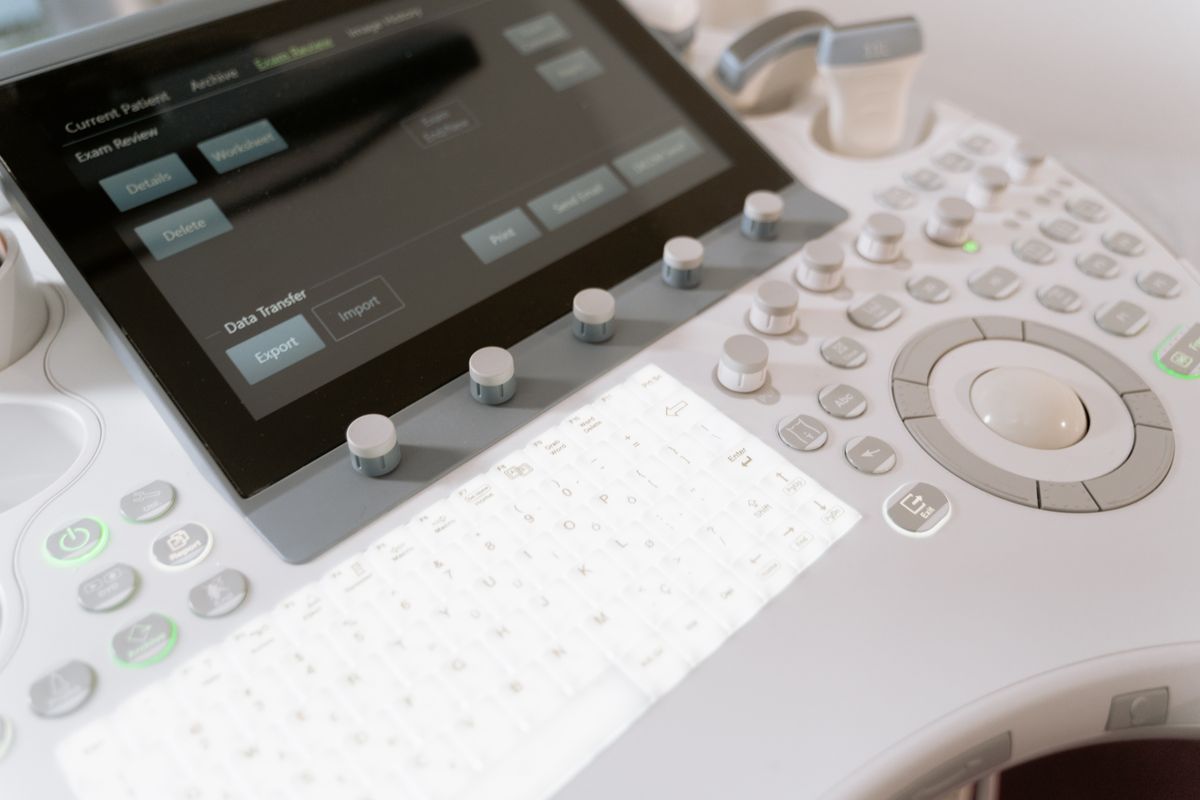
Pregnancy, Birth and Baby says a scan usually takes around 30 minutes. Inside Radiology allows 30 to 45 minutes for the 18 to 20 week examination. You lie on a couch, gel goes on the abdomen, and the transducer is moved across the skin. In early pregnancy you may be asked to have a full bladder, so confirm the preparation when you book. An NT scan also needs a blood test, timed with the ultrasound.
Results often come back the same day, though they can take longer. You can ask for copies of the images. The full report goes to your midwife or doctor. If something is flagged, they can explain the findings and the next steps, including referral for CVS or amniocentesis, or to a genetic counsellor.
Scans are your choice. "You will be given information about each test so that you can make an informed decision," Pregnancy, Birth and Baby says. Alternatives include monitoring growth at regular antenatal visits, and, for chromosomal screening, a blood test such as NIPT. Talk through the reasons, benefits and risks with your midwife or doctor before you book.
Where to start
One anomaly-screening scan is offered at 11 to 14 weeks, and a morphology scan at 18 to 22 weeks, usually around 20 weeks. A dating scan before 12 weeks is used when dates are uncertain, or when there is a clinical reason to look earlier. Later growth scans are added when indicated. From 1 July 2026, the standard 85% Medicare benefits for those main scans are $60.10, $70.15 and $100.20. Confirm the clinic's fee, whether it bulk bills, and any gap, before you attend. The scans remain a choice you make with your doctor or midwife.
Sources
- RANZCOG, "Screening and diagnosis of fetal structural anomalies and chromosome conditions (C-Obs 35)", 2024, https://www.ranzcog.edu.au/wp-content/uploads/Fetal-Anomalies-Clinical-Guideline.pdf
- RANZCOG, "Routine antenatal assessment in the absence of pregnancy complications (C-Obs 3b)", https://ranzcog.edu.au/wp-content/uploads/Routine-Antenatal-Assessment.pdf
- Pregnancy, Birth and Baby, "Ultrasound scans during pregnancy", last reviewed February 2026, https://www.pregnancybirthbaby.org.au/pregnancy/antenatal-care-and-tests/ultrasound-scan
- Healthdirect, "Routine antenatal tests", accessed 18 November 2026, https://www.healthdirect.gov.au/routine-antenatal-tests
- Australian Government Department of Health, "Pregnancy timeline" fact sheet, updated 2025, https://www.health.gov.au/sites/default/files/2025-09/fact-sheet-pregnancy-timeline.pdf
- Medicare Benefits Schedule, items 55700, 55704, 55707, 55706 and 55718, schedule fees updated 1 July 2026, https://www9.health.gov.au/mbs/fullDisplay.cfm?q=55700&type=item
- Inside Radiology, "Nuchal Translucency Scan", https://www.insideradiology.com.au/nuchal-translucency-scan/
- Inside Radiology, "18-20 Week Screening Pregnancy Ultrasound", https://www.insideradiology.com.au/18-20-week-ultrasound/
- East Melbourne Ultrasound, "Costs", fees effective 1 August 2026, https://emultrasound.com.au/costs/
- Vision XRAY Group, "Obstetric Ultrasonography (Pregnancy Ultrasound)"