Victoria and Tasmania both require a heater in the main living area of a rental. New South Wales does not. Its seven fitness standards, published by NSW Fair Trading, ask for adequate ventilation and enough electricity or gas sockets for heating, but not the heater itself. Consumer Affairs Victoria, in guidance last updated on 14 October 2026, also requires rooms to be free of mould and damp related to the building, and from 13 October 2026 rental providers must keep records showing the standards were met.
What does official health guidance say about mould?
Better Health Channel, Victoria's official public health information site, says mould grows best in damp and poorly ventilated areas. It can trigger nasal congestion, sneezing, cough, wheeze and respiratory infections, and can worsen asthma and allergic conditions. People with weakened immune systems, allergies, severe asthma or chronic lung disease are more susceptible. The same page is clear that there is no practical way to eliminate all indoor mould, and that the way to control it is to control moisture.
The cheapest first step it recommends is opening a door or window, and using exhaust fans where they exist. Building faults still have to be fixed: leaking roofs and walls, faulty plumbing, and blocked gutters. Condensation from cooking, showering and indoor clothes drying can start growth if air cannot move. For rentals, it says the owner should fix mould caused by faults in gutters or other fixtures, and the tenant should use extractor fans and air the home where possible.
That advice matches the tenancy split used in several states: report mould early, work out whether the cause is a leak or a closed window, and do not treat a surface clean as a repair if the moisture source is still there. If you are worried about symptoms, see a doctor. NSW Fair Trading also points tenants to a local Public Health Unit on 1300 066 055.
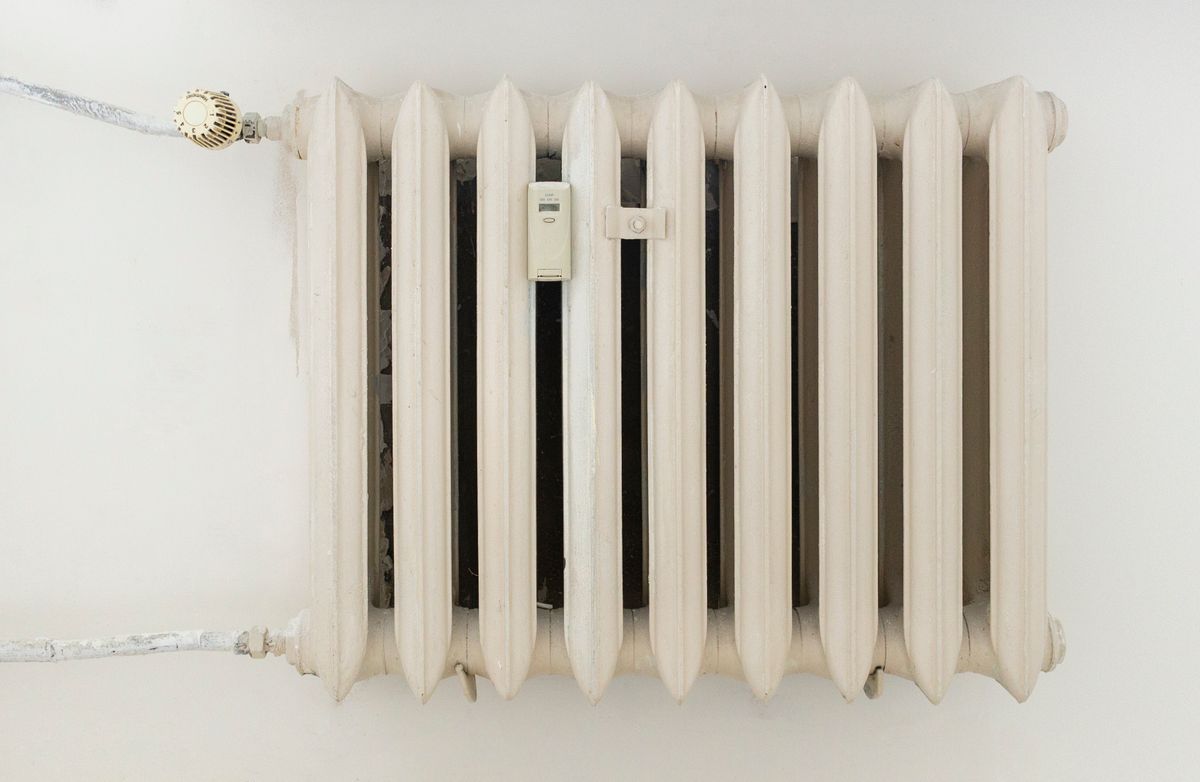
Victoria: a living-room heater, and records from 13 October 2026
Victoria's rental minimum standards sit in Schedule 4 of the Residential Tenancies Regulations 2021. They apply to agreements that started on or after 29 March 2021, and to earlier agreements that became periodic on or after that date. They do not apply if the agreement became periodic before 29 March 2021.
Heating is specific. Every rental must have a fixed heater, not a portable one, in good working order in the main living area. For agreements entered into from 29 March 2023, that heater must be energy efficient, or an existing inefficient heater must be upgraded. Energy efficient, in the Consumer Affairs Victoria list, means a non-ducted air conditioner or heat pump of 2 stars or above, a gas space heater of 2 stars or above, a ducted or hydronic system with an outlet in the main living area, or a domestic solid-fuel appliance such as a wood heater. In some apartments, an energy-efficient unit may be unreasonable because of owners corporation rules or markedly higher costs. A fixed heater is still required, and the rental provider should have evidence and tell the renter before the agreement starts.
Mould and damp are also specific. All rooms must be free from mould and damp caused by or related to the building structure. Ventilation must be adequate in all habitable rooms, including the bathroom, shower, toilet and laundry, and must meet the relevant Building Code of Australia requirements. The property must also be structurally sound and weatherproof.
From 13 October 2026, rental providers and their agents must keep records showing the property met the standards before it was advertised or offered, and before the renter moved in. Consumer Affairs Victoria can ask to see those records. New energy-efficiency minimum standards are scheduled to start on 1 March 2027; the current Consumer Affairs page flags that date and should be checked for the detail as the start date approaches.

New South Wales: seven habitability standards, but no mandated heater
NSW Fair Trading requires landlords to provide premises that are reasonably clean and fit for the tenant to live in. To be fit to live in, a property must, at a minimum: be structurally sound; have adequate natural or artificial lighting in each room, except storage rooms or garages; have adequate ventilation; be supplied with electricity or gas, and have enough sockets for lighting, heating and other appliances; have adequate plumbing and drainage; have a water connection that can supply hot and cold water; and have bathroom facilities, including a toilet and washing facilities that allow privacy.
Those seven points must be maintained throughout the tenancy, and a property can still be unfit for other reasons. The heating line is about supply and sockets, not about installing a heater. A landlord who already provides a heater as an essential service may have to repair it if it fails, but that is not a duty to install one.
On mould, Fair Trading says responsibility depends on how the mould developed. If it grew because the landlord failed to repair a defective window in a reasonable time, or because the property did not have adequate ventilation, the landlord must fix it. If it developed because the tenants never opened windows or did not use bathroom ventilation fans, the tenant may be responsible. Tenants must notify the landlord or agent as soon as they see signs of mould or damp. The condition report has a dedicated mould section, and a note on that report does not remove the landlord's duty to keep the property in a reasonable state of repair. A fault that makes the property unsafe and causes health risks such as mould may be an urgent repair.
Queensland and South Australia: mould and damp written into the standard
Queensland's minimum housing standards, administered by the Residential Tenancies Authority, apply when the tenant moves in and throughout the agreement, including moveable dwellings and rooming accommodation. The property must be weatherproof and structurally sound. Weatherproof, the RTA says, means the roof or windows must prevent rainwater entering. Structurally sound includes walls, ceiling and roof that are not likely to collapse or be affected by significant dampness.
The property must also be free from vermin, damp and mould, except where the tenant caused the problem. The RTA's examples are direct: mould from a leaking roof is the manager or owner's responsibility; mould from a tenant allowing steam to build up in a bathroom and not ventilating or cleaning it is the tenant's. There is no prescribed living-room heater on the RTA's minimum-standards page. If a maintenance issue during the tenancy means the property no longer meets the standards, the tenant must tell the manager, owner or emergency-repair contact, and the repairs are classified as emergency repairs.
South Australia's Housing Safety Authority sets minimum housing standards for premises to be considered safe and suitable for human habitation. For the property as a whole, it must be reasonably draught proof and weatherproof, reasonably free from mould or other irritants, reasonably free from the adverse effects of moisture or damp, and have effective drainage. Living and dining areas, and bathrooms and toilets, must be adequately ventilated. The Authority's bathroom examples include cracked shower tiles with water leakage leading to mould, and growing mould in a bathroom. As with Queensland, the official pages reviewed here do not prescribe a fixed heater in the living room.

Western Australia: insulation where necessary, but no mandated heater
Western Australia does not publish a Victoria-style schedule of 15 rental minimum standards. Consumer Protection, in guidance last updated on 26 November 2024, says the landlord must keep the home in a reasonable condition and make sure it complies with WA building, health and safety laws. Tenants can reasonably expect the building to be structurally sound, free from hazards such as leaking roofs, weatherproof, and insulated to protect them from extreme temperatures where necessary. Functioning facilities must include hot and cold water and proper drainage. There is no stated duty to install a living-room heater.
On mould, the WA page is explicit. Mould or mildew caused by faults in gutters or other fixtures should be fixed by the landlord. Bathroom mould from the age of the home, from there being no ventilation fan or window, or from a reported fan that is not working, is listed as the landlord's responsibility. Mould from the tenant not using an installed fan or not opening windows may be the tenant's. Perth owners who need trades coordinated for ventilation, insulation or other repairs can also look at Inhabit Property's property improvement service, which the Perth agency offers alongside sales. That is a practical option for organising work, not a substitute for the legal standard.
Tasmania, the ACT and the Northern Territory
Tasmania does require a heater. Consumer, Building and Occupational Services, on a types of minimum standards page last updated on 19 February 2019 and still published as current guidance, says a property must have a heater in the main living area before it can be rented. A heater can be a fixed electric or gas heater, a heat pump, or a wood heater, but not an open fireplace. Fixed means attached to the wall, not necessarily hard-wired, and the heat should be available on demand at a reasonable level for the area. Ventilation openings should be at least 5 per cent of the room's floor area, and a window used as ventilation must be able to be fastened open at least 15 centimetres. Bathrooms, toilets and laundries may instead have a functioning extraction system. A toilet room must have a vent, an opening window or an extraction fan. Serious mould or rising damp can fail the cleanliness or good-repair standards.
The ACT's distinctive rule is insulation, not a mandated heater. The minimum housing standard for ceiling insulation requires properties with no ceiling insulation, or insulation below R2, to be upgraded to a minimum of R5. Existing insulation of at least R2 already complies. For existing tenancies, the deadline is 30 November 2026 unless an exemption applies. New agreements must comply within nine months of signing. Permanent exemptions include heritage constraints, lower-floor units, physical roof constraints, and cases where the cost for the entire property would exceed $10,000, although the landlord must still spend up to $10,000 in rooms tenants use most. Compliance or exemption must be disclosed in advertisements and in the agreement.
The Northern Territory's official repairs and maintenance page requires landlords to maintain the property in a reasonable state of repair, allowing for wear and tear. Emergency repairs include a serious roof leak, flooding, failure of an essential service, and a fault that makes the premises unsafe. The page does not set a prescribed living-room heater or a standalone mould schedule of the Victorian kind.

What should you do if the property fails a standard?
Write down what you can see, when you first noticed it, and what you have already done, such as using an exhaust fan or opening windows. Take dated photographs, and keep copies of every email or text. Check the ingoing condition report, especially any mould section. Then notify the landlord, rental provider or agent in writing. In Queensland, a failure of the minimum housing standards during a tenancy is an emergency repair. In New South Wales, a fault that makes the property unsafe may be an urgent repair. In the Northern Territory, after notice, the landlord has five days to make emergency repairs or to arrange for them to be made within 14 days.
Do not stop at cleaning if the cause is a leak, a failed roof, a blocked gutter or a room with no lawful ventilation. Official health guidance says moisture has to be controlled for mould control to last. If the cause is disputed, the tenancy authority or tribunal can consider the condition report, the notices and, where relevant, a trades report.
Owners advertising a property should also check whether their jurisdiction now requires disclosure or records before the first inspection. Victoria's record-keeping duty from 13 October 2026 and the ACT's insulation disclosure rules are current examples.
Standards at a glance
The table below summarises the official heating, mould and ventilation rules cited here. It is a reading aid, not a substitute for the current legislation or agency page in your jurisdiction.
| Jurisdiction | Heating or warmth | Mould and damp | Ventilation |
|---|---|---|---|
| Victoria | Fixed heater in the main living area; energy efficient for agreements from 29 March 2023 | All rooms free of mould and damp related to the building structure | Adequate ventilation meeting the Building Code of Australia, including wet areas |
| New South Wales | Enough electricity or gas sockets for heating; no mandated heater | Landlord responsible if caused by unrepaired defects or inadequate ventilation; tenant may be responsible if they did not ventilate | Adequate ventilation is one of seven fitness standards |
| Queensland | No prescribed living-room heater on the RTA page | Free of vermin, damp and mould, unless caused by the tenant | Weatherproof and structurally sound, including no significant dampness |
| South Australia | No prescribed living-room heater on the Authority pages reviewed | Reasonably free from mould or other irritants, and from moisture or damp | Living areas and bathrooms must be adequately ventilated |
| Western Australia | Insulated where necessary against extreme temperatures; no prescribed heater | Landlord: faults, missing or failed ventilation; tenant: not using installed fans or windows | Weatherproof, structurally sound; bathroom ventilation is part of the mould split |
| Tasmania | Heater required in the main living area (guidance last updated 19 February 2019) | Serious mould or rising damp can fail cleanliness; significant mould can fail good repair | Openings at least 5 per cent of floor area; wet areas may use an extraction system |
| Australian Capital Territory | Ceiling insulation R5 (or existing R2 or above) by 30 November 2026 for most existing tenancies | No separate mould schedule on the insulation page | Not a standalone ventilation standard on that page |
| Northern Territory | No prescribed heater on the official repairs page | No standalone mould schedule; unsafe faults are emergency repairs | No standalone ventilation schedule on that page |
Key takeaways
Victoria and Tasmania require a heater in the main living area. New South Wales requires sockets for heating, not the appliance. The ACT's current stand-out rule is ceiling insulation, with a 30 November 2026 deadline for most existing tenancies.
Mould is a health issue and a building issue. Official health guidance links indoor mould to respiratory symptoms. Official tenancy pages generally make the landlord responsible for leaks and structural damp, and may make a tenant responsible if they did not use available ventilation.
From 13 October 2026, Victorian rental providers must keep records of compliance. If a property fails a standard, give written notice, keep photographs, and use the urgent or emergency repair pathway that applies in your jurisdiction.
Sources
- Consumer Affairs Victoria, Rental properties - minimum standards, last updated 14 October 2026.
- NSW Fair Trading, Minimum standards for rental properties.
- NSW Fair Trading, Mould in a rental property.
- Residential Tenancies Authority (Queensland), Minimum housing standards.
- Housing Safety Authority (South Australia), Minimum housing standards, including whole property and bathroom and toilet.
- WA Consumer Protection, Rental home maintenance, last updated 26 November 2024.
- Consumer, Building and Occupational Services (Tasmania), Types of minimum standards for rental properties, last updated 19 February 2019.
- ACT Government, Minimum housing standard for ceiling insulation in rental properties.
- NT.GOV.AU, Repairs and maintenance on rented properties.
- Better Health Channel, Mould and your health.
- Inhabit Property, About and Property Improvement Service.