Choosing early childhood education and care can feel like learning a new language. Long day care, family day care, preschool, kindergarten, kindy: the terms change by state, and the differences matter for your child's day, your work hours and your budget.
The side-by-side comparison below uses 2026 government information, so you can work out which fits your family.
The three options at a glance
| Long day care | Family day care | Preschool or kindergarten | |
|---|---|---|---|
| Setting | Purpose built centre | Educator's home or agreed venue | School, community kindergarten or long day care centre |
| Ages | Babies to school age | Babies to school age, plus some school age | Usually 3 to 5, the year or two before school |
| Group | Grouped by age in rooms | Small mixed age group | Age based group |
| Ratio | Set by age under the National Quality Framework | 1 educator to 7 children, no more than 4 under school age | Set by age; centre ratios apply |
| Hours | Long days, often early to evening | Flexible, set by educator | Sessions, often school hours or part days |
| Child Care Subsidy | Yes | Yes | Yes when run by an approved childcare service; stand alone programs are often state funded |
Source: Starting Blocks, Choosing between family day care and long day care; ACECQA; Department of Social Services, Family Assistance Guide 3.5.3.
What they have in common
According to Starting Blocks, all education and care services operating under the National Quality Framework:
- go through compliance, assessment and rating by state and territory regulators
- receive a quality rating against the National Quality Standard
- are eligible for Child Care Subsidy
- provide a child centred educational program
- employ qualified educators and must meet ratios throughout the day
- have an educational leader guiding the program
So the choice is not between "care" and "education". All three should offer both. The differences are in the setting, group size, hours and how the service runs.
Long day care
Long day care centres are what many people picture when they think of childcare. Children are usually grouped by age, for example a 0 to 2 room, a 2 to 3 room and a 3 to 5 room. Larger centres may have several rooms for each age.

Ratios in centres
ACECQA sets the minimum educator to child ratios. For centre based services, they are:
| Age of children | Educator to child ratio |
|---|---|
| Birth to 24 months | 1:4 |
| Over 24 months to 36 months | 1:5 (1:4 in Victoria) |
| Over 36 months to preschool age | 1:10 or 1:11, depending on state or territory |
Source: ACECQA, Educator to child ratios.
Strengths
- Long opening hours suit full time and shift working parents
- Several educators means cover when one is sick or on leave
- Children mix with others their own age
- Many centres run a funded preschool or kindergarten program on site
Trade offs
- Larger groups can be overwhelming for some young children
- Baby places often have long waitlists
- Educator turnover can affect continuity
Family day care
In family day care, an educator cares for a small group of children in their own home or an agreed venue. Starting Blocks says the ratio is one educator to seven children, with no more than four under school age. The educator's own children under 13 count toward that total if no other adult is caring for them.
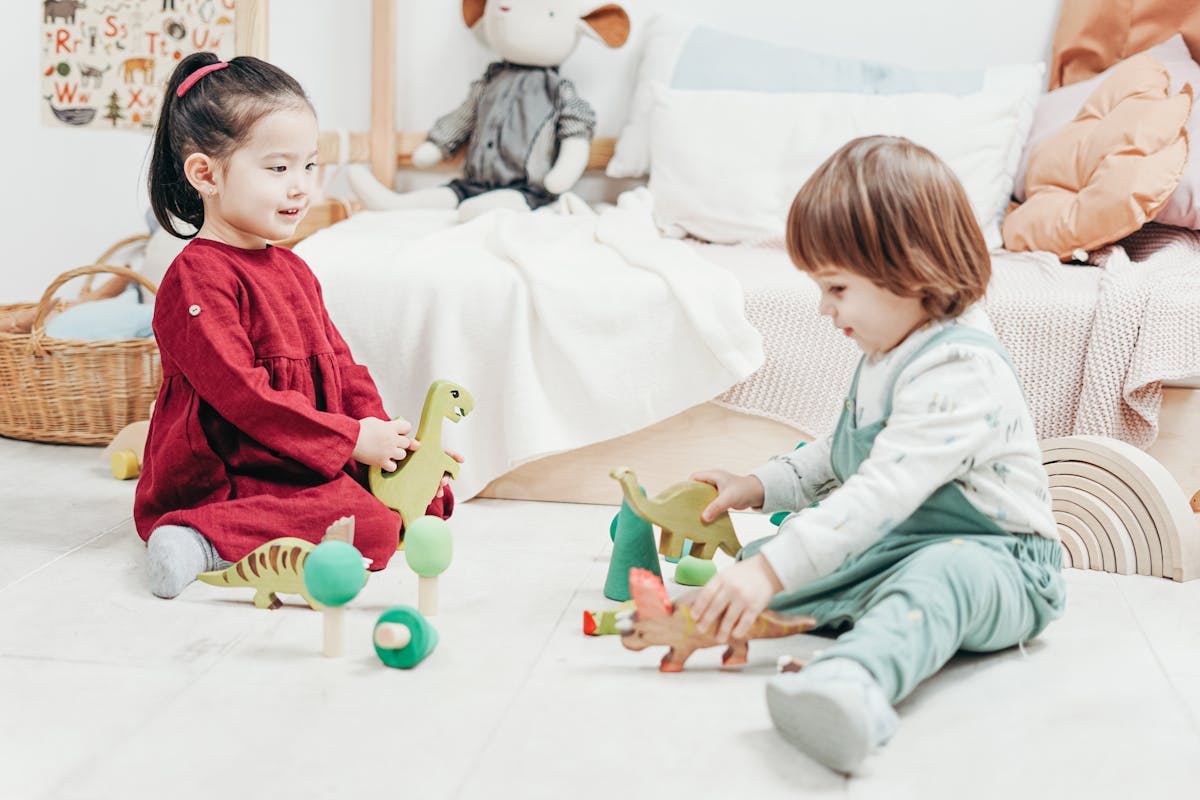
Each educator belongs to a family day care scheme, which employs a coordinator who visits regularly to provide guidance on regulatory matters. Educators often take children on routine outings to the library, park, playgroup or a coordination unit play session.
Strengths
- Small, home like setting with one consistent educator
- Mixed ages, which can suit siblings
- Often more flexible hours, sometimes including evenings, weekends or overnight
- Available in areas with few or no centres
Trade offs
- When the educator is on leave, children may go to another educator's home
- Fewer peers of the same age
- Quality depends heavily on one person, so visit and ask questions
Preschool and kindergarten
Preschool, called kindergarten or kindy in some states, is an early education program for children in the year or two before school. It may be run by a school, a community kindergarten or a long day care centre. Programs focus on play based learning and getting ready for school.
Hours vary. Stand alone preschools often run during school terms in sessions, which can be hard to combine with full time work. Long day care centres that run kindergarten programs offer the same learning within longer days.
Combining preschool with work
Working parents often juggle a sessional preschool with other care. One approach is to use a stand alone preschool on two or three mornings and family day care or long day care for the rest of the week. Some family day care educators drop off and collect children from local preschools, which Starting Blocks notes is one reason assistant educators are used. Another approach is to choose a long day care centre with a kindergarten program, so your child gets the funded program and full day care in the same place. Ask each service how the kindergarten hours fit into the day and whether a qualified early childhood teacher runs them.
State funding
Each state and territory funds preschool or kindergarten differently, and several now offer free or low cost hours in the year before school. Check your state education department for current programs and eligibility, as the rules and names differ. The Queensland Government's comparison of early childhood services is an example of state level guidance.

How much does each cost?
Fees vary widely by provider and location. What most families pay depends on the Child Care Subsidy, which pays a percentage of the fee up to an hourly rate cap. The Family Assistance Guide sets these caps from 6 July 2026.
| Service type | Hourly rate cap, below school age | Hourly rate cap, school age |
|---|---|---|
| Centre based day care (long day care) | $15.19 | $13.30 |
| Family day care | $14.08 | $14.08 |
| Outside school hours care | $15.19 | $13.30 |
| In home care (per family) | $41.31 | $41.31 |
Source: Department of Social Services, Family Assistance Guide 3.5.3, 2026 to 2027 caps.
If a service charges more than the cap, you pay the difference in full on top of your share. The guide gives the example of a centre charging $154 for a 10 hour session, or $15.40 an hour. Because that is above the $15.19 cap, the subsidy is worked out on the cap and the family pays the gap.
The 3 Day Guarantee
Since 5 January 2026, the 3 Day Guarantee has given all subsidy eligible families at least 72 hours of subsidised care a fortnight, regardless of activity. Families with more than 48 hours of recognised activity a fortnight can get 100 hours. The guarantee covers subsidised hours, not a place, so you still need to find a service with room.
What is included in the daily fee?
Two services with the same daily fee can offer very different value. Starting Blocks notes that, depending on the service, meals and nappies may or may not be included in the fee, and opening hours differ too. Some services operate on weekends, overnight or during school holidays.
Things to compare
- Meals: are breakfast, lunch, snacks and late afternoon tea provided, or do you pack a lunchbox?
- Nappies, wipes, sunscreen and formula
- Session length: a 10 or 12 hour session is charged in full even if you only use 8 hours
- Excursions and incursions, such as music or sport programs, and whether they cost extra
- Public holidays and closure periods, and whether you pay for them
Starting Blocks also explains that a service must ask your permission before taking a child out, and must carry out a risk assessment of the transport and location for excursions. Regular outings, such as walks to the library, may be covered by a standing permission.
Tip: work out an hourly cost for each service by dividing the daily fee by the hours of the session. That makes it easier to compare against the subsidy cap and against each other.
Helping your child settle in
Whatever you choose, the first weeks can be hard for children and parents. A gradual start helps. Many services offer short orientation visits before the first full day, and it is worth taking every one you can.
Talk to the educators about your child's routines, sleep, food and comforters. Bring a familiar item from home if the service allows it. Keep goodbyes short and warm, and tell your child when you will be back in terms they understand, such as after afternoon tea.
Family day care can suit children who find large groups noisy and busy, because there are fewer children and one main educator. Long day care can suit confident children who enjoy lots of activity and peers their own age. Many children adapt well to either with time and support.
When to think about a change
If your child is still very unsettled after several weeks, talk to the educators about what they see. Sometimes a change of days, a shorter session or a different room helps. If you have concerns about care, you can raise them with the service, and then with the state or territory regulatory authority if needed.
Which suits your family?
| If you need... | Consider |
|---|---|
| Full days for full time work | Long day care, or family day care with suitable hours |
| A small, home like setting for a baby or toddler | Family day care |
| Care outside standard hours | Family day care, some long day care centres |
| School readiness in the year before school | Preschool or kindergarten, at a centre or stand alone |
| Care for siblings of different ages together | Family day care |
| Backup cover when educators are away | Long day care |
Source: compiled for this guide from Starting Blocks.
Many families mix and match. A common pattern is family day care for a baby, then long day care, then a kindergarten program in the year before school, either at the centre or a stand alone preschool.
Questions to ask on a visit
Starting Blocks suggests visiting both types of service and asking:
- What is the service's quality rating under the National Quality Standard?
- Is there a waiting list, and how long is it?
- What is the service's philosophy, and how does it shape relationships with children?
- Have there been recent staff changes, or has the service been sold?
- How many educators will be in the room with my child?
- Who is the approved provider, and how long has the service operated?
For family day care, also ask how often the coordinator visits, who else will be at the home, and whether the educator attends playgroups.
An early learning provider such as Red Apple Early Learning can walk you through its rooms, kindergarten program and fees after subsidy, which makes it easier to compare options on real numbers.
Putting it together
Long day care offers long hours, age based rooms and built in backup. Family day care offers a small, home based group with one educator and often more flexibility. Preschool or kindergarten focuses on learning in the year or two before school, either in sessions or within a long day care centre. All are regulated and rated under the same national framework. Choose based on your child, your hours and what is available nearby, and visit before you decide.
Sources
- Starting Blocks, "Choosing between family day care and long day care", accessed 18 November 2026, https://www.startingblocks.gov.au/resources/types-of-services/choosing-between-family-day-care-and-long-day-care
- ACECQA, "Educator to child ratios", accessed 18 November 2026, https://www.acecqa.gov.au/nqf/educator-to-child-ratios
- Department of Social Services, Family Assistance Guide, "3.5.3 CCS hourly rate caps", accessed 18 November 2026, https://guides.dss.gov.au/family-assistance-guide/3/5/3
- Department of Education, "3 Day Guarantee", accessed 18 November 2026, https://www.education.gov.au/early-childhood/providers/child-care-subsidy/3-day-guarantee
- Queensland Government, "Comparing types of early childhood services", accessed 18 November 2026, https://www.qld.gov.au/family/family-and-parents/babies/childcare/finding/comparing
- Starting Blocks, Australian Government, accessed 18 November 2026, https://www.startingblocks.gov.au/