Osteoporosis in Australia is usually diagnosed with a dual energy X-ray absorptiometry study, also called DXA or DEXA, of the lumbar spine and hip. The rebate depends on a listed Medicare indication. The six MBS bone densitometry items, checked 18 November 2026, show a schedule fee of $122.55 from 1 July 2026 and an 85% outpatient benefit of $104.20. Note DN.1.18 states that "Patients 70 years and over are eligible for an initial screening study." Under 70, the rebate usually depends on a minimal trauma fracture, a proven low reading, a listed medical condition, or specified glucocorticoid or hormone findings.
Quick answer
The six items sit in MBS Category 2, subgroup 10. Fees took effect on 1 July 2026.
| MBS item | Who it covers | How often | 85% outpatient benefit |
|---|---|---|---|
| 12320 | Aged 70 or over: first scan, or a previous T-score of -1.5 or better | Once in 5 years | $104.20 |
| 12322 | Aged 70 or over, T-score less than -1.5 but more than -2.5 | Once in 2 years | $104.20 |
| 12306 | Minimal trauma fracture, or monitoring of low bone density proven at least 12 months earlier | Once in 24 months | $104.20 |
| 12312 | Current prolonged glucocorticoid therapy, glucocorticoid excess, male hypogonadism, or female hypogonadism for more than 6 months before age 45 | Once in 12 months | $104.20 |
| 12315 | Primary hyperparathyroidism, chronic liver or kidney disease, proven malabsorption, rheumatoid arthritis, or thyroxine excess | Once in 24 months | $104.20 |
| 12321 | Established low bone density, or a presumptive diagnosis after a minimal trauma fracture, 12 months after a significant change in therapy | Once in 12 months | $104.20 |
Source: MBS items 12306 to 12322 and note DN.1.18 (fees from 1 July 2026, checked November 2026). The 75% in-hospital benefit is $91.95.
The 2022 National Health Survey put the reported rate of osteoporosis at 3.4%. Healthdirect says: "The cost of a DEXA bone density scan is sometimes covered by Medicare."
Who needs a bone density scan?
The clinical list and the Medicare list overlap, but they are not the same.
Clinical advice on who should be tested
Healthy Bones Australia says "Women and men over 50 with risk factors for osteoporosis need a bone check-up with a DEXA scan." Younger adults with risk factors may also need a test. Healthdirect lists higher-chance groups as females over 50 and males over 60 who also have a family history of a fragility fracture, smoking, alcohol above healthy levels, vitamin D or calcium deficiency, low body weight, recurrent falls, low activity, or long-term corticosteroid therapy. Early menopause, endocrine disorders, anorexia nervosa, diabetes and HIV are on that list too.
The 2024 RACGP and Healthy Bones Australia guideline, published in the Medical Journal of Australia in 2025, prefers case finding to population screening. "There is insufficient evidence to recommend population-based systematic screening with BMD measurement for reduction of osteoporotic fractures in Australia," it says. For people over 50 with lifestyle or non-modifiable risk factors, such as a parent with a hip fracture, it suggests FRAX. Refer for DXA if the 10-year major osteoporotic fracture risk is 10% or higher. Skip DXA if that risk is under 10%. After age 50, diseases or medicines linked to higher fracture risk, or a minimal trauma fracture, should also prompt a DXA referral.
Where the rebate is narrower than clinical advice
A clinically sound request can still fall outside the MBS. A 58-year-old woman who has reached menopause, whose parent broke a hip, and whose FRAX major osteoporotic fracture risk is 12%, is a reasonable DXA candidate under that guideline. The rebate will not apply unless another MBS indication is present. From age 70, note DN.1.18 allows a rebate for an initial study even with no other risk factor recorded.

Which Medicare item number applies
Every item requires measurement of 2 or more sites, plus interpretation and a report by a specialist or consultant physician. The scan may be done by that specialist or by a radiation licence holder under the specialist's supervision. Two or more sites "must include the measurement of bone density of the lumbar spine and proximal femur," according to note DN.1.18. A forearm-only or heel-only study does not attract a benefit. If the spine or hip cannot be measured, the note recommends the distal forearm, for example after spinal fusion or bilateral hip replacements.
Items 12320 and 12322 may use DXA or quantitative computed tomography (QCT). The other four items specify DXA. If someone aged 70 or over already has a T-score of -2.5 or lower, a later scan is usually billed under item 12306 for monitoring of proven low bone density. Item 12322 stops short of that threshold.
What the item notes require
Item 12312 is tightly defined. "Prolonged glucocorticoid therapy" means an inhaled dose equivalent to or greater than 800 micrograms of beclomethasone dipropionate or budesonide per day, or an oral adult dose equivalent to or greater than 7.5 mg of prednisolone per day, "for a period anticipated to last for at least 4 months." The therapy "must be contemporaneous with the current scan," the note says. Stopped steroids will not support the item. Male hypogonadism, for the same item, means serum testosterone below the age-matched normal range. Female hypogonadism means serum oestrogen below the age-matched normal range, lasting more than 6 months before age 45.
Under item 12315, a malabsorptive disorder is tightly defined. The note accepts fat malabsorption (faecal fat greater than 18 g per 72 hours on a normal fat diet), bowel disease with a sub-normal circulating 25-hydroxyvitamin D level, or histologically proven coeliac disease.
A "significant change in therapy" opens item 12321. The note illustrates that as "a change in the class of drugs," not a dose change.
What does a bone density scan cost?
Bulk billing an eligible item leaves you with nothing to pay. If a clinic charges the $122.55 schedule fee for an outpatient scan, the 85% benefit of $104.20 leaves a gap of $18.35. A higher private fee leaves a larger gap unless the clinic bulk bills.
The worked examples use July 2026 fees published by two Sydney practices, JW Nuclear Medicine and Chatswood Densitometry, checked in November 2026. They are not a national average.
Bulk billing, schedule fees and private prices
| Example | Likely item | Published fee (July 2026) | Medicare benefit | Out-of-pocket if not bulk billed |
|---|---|---|---|---|
| Age 71, first screening scan | 12320 | These two clinics bulk bill ages 70 and over | $104.20 | $0 if bulk billed |
| Eligible patient under 70, charged the private DXA fee | 12306, 12312, 12315 or 12321 | $160 (JW) or $165 (Chatswood) | $104.20 | $55.80 or $60.80 |
| Age 58, family history only, no MBS item | None | $160 or $165 | $0 | $160 or $165 |
| Pensioner under 70, no item number, at these clinics | None | Concession $65 to $75 (Chatswood) or $75 (JW) | $0 | $65 to $75 |
| Add-on lateral vertebral assessment (LVA) | No MBS rebate | $40 (Chatswood) or $50 (JW) | $0 | $40 to $50 |
Source: MBS fees from 1 July 2026; JW Nuclear Medicine and Chatswood Densitometry fee schedules, July 2026. Fees vary by provider and location.
Healthdirect says if Medicare does not cover the cost, "you will need to pay the full amount yourself." A private health fund may contribute to a non-rebated scan. Both fee pages tell patients to check with their fund. Body composition (fat and lean tissue) is billed separately. "At present, Medicare does not reimburse for body composition scans only," the JW and Chatswood fee pages state. Public hospitals and other radiology practices also offer DXA. Confirm the fee and any bulk-billing rules when you book.
How T-scores and Z-scores are reported
Healthdirect and Healthy Bones Australia use the same T-score bands.
| T-score | Result | What it usually means |
|---|---|---|
| -1 or above | Normal | In the expected young-adult range |
| Between -1 and -2.5 | Osteopenia (low bone density) | Below the young-adult mean. Osteoporosis may develop later |
| -2.5 or below | Osteoporosis | Fracture risk is high. Treatment is often considered |
Source: Healthdirect, Bone density scan, last reviewed March 2025; Healthy Bones Australia, Diagnosis.
The T-score compares your bone mineral density with a young adult of the same sex. The Z-score compares you with people of the same age and sex. Results also appear in g/cm2, Better Health Channel notes. Doctors also weigh age, sex, recent falls and fractures since 50.
For rebate purposes, the MBS defines "low bone mineral density" as density more than 1.5 standard deviations below the age-matched mean, or more than 2.5 standard deviations below the young normal mean, at the same site and in the same gender. A previous low result can open item 12306 for monitoring before age 70.
A T-score is not a treatment order on its own. The 2024 guideline discusses treatment when the T-score is -2.5 or lower, or when it sits between -1.5 and -2.5 and FRAX risk is at least 20% for a major osteoporotic fracture or 3% for a hip fracture. Your doctor should apply that to your history.

How should you prepare for the scan?
Clothes can usually stay on if they have no metal zips, buttons, hooks or jewellery. Many clinics ask you to pause calcium supplements for 24 hours. That instruction appears on the Vision XRAY Group bone densitometry page and the two Sydney densitometry fee pages. Inside Radiology says no special preparation is required. Follow the booking letter.
Oral contrast within about a week, or intravenous contrast within a day, can affect accuracy. Tell the clinic about a recent barium study, radioisotope injection or CT contrast, and about spinal metal or hip replacements. Pregnancy, or possible pregnancy, makes the test unsuitable. Inside Radiology says the scan "does involve a very small dose of radiation."
What happens during the scan
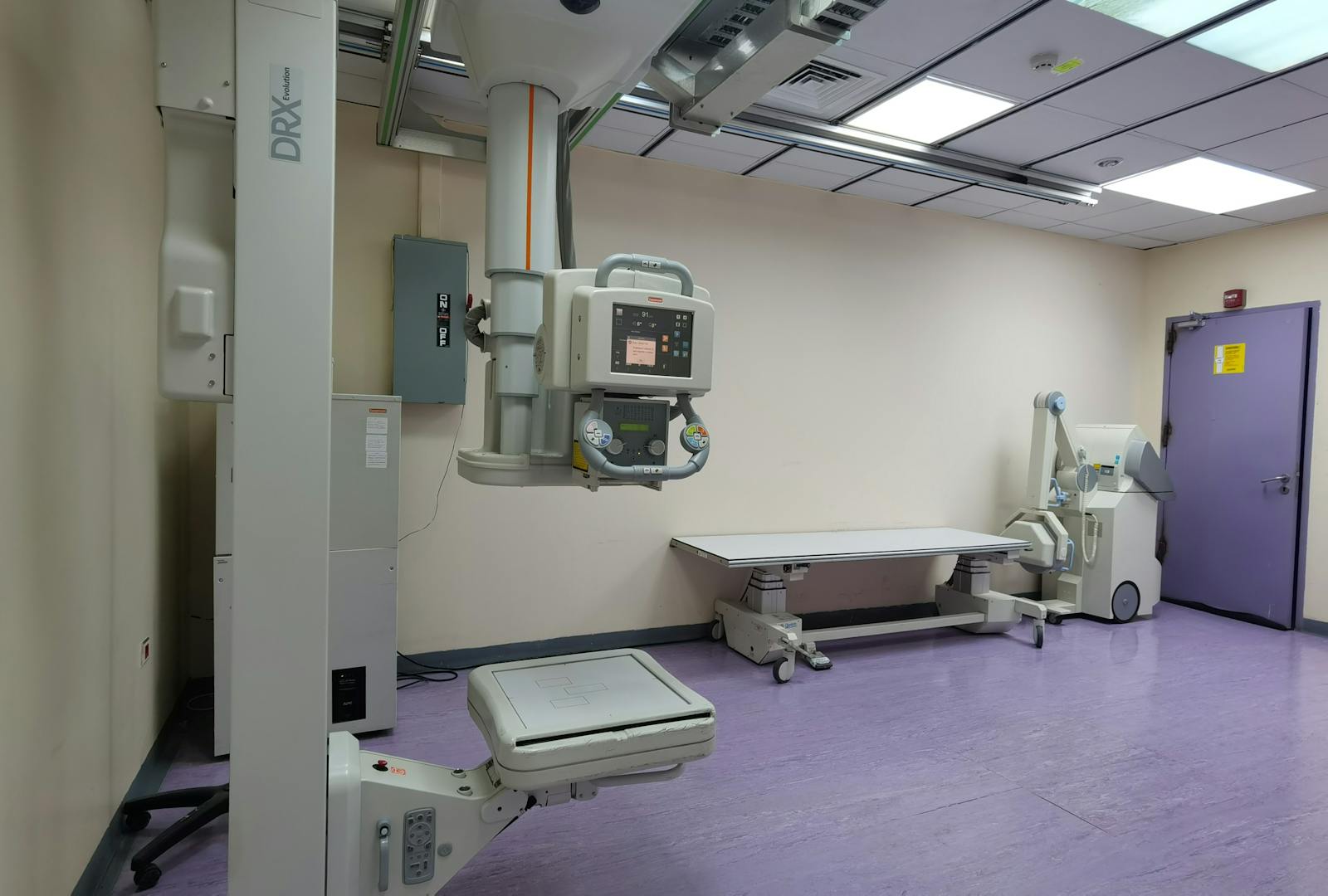
Inside Radiology, a RANZCR guide, describes a typical visit. Height and weight are recorded first. You lie on an open padded table, not in a tunnel. A cushioned box goes under the knees for the spine, and a frame holds the foot for the hip, so later scans can be compared. The machine arm passes over the lumbar spine and then the hip. The test does not hurt. There are no after-effects, according to that guide.
About 20 minutes is the Healthdirect figure. Healthy Bones Australia puts the scan at about 10 to 15 minutes. Inside Radiology gives a range of 10 to 30 minutes, depending on the machine. Radiation doses are "significantly less than those used in normal X-ray images," it says, so the technologist can stay in the room. Better Health Channel likens the dose to "roughly the same as you would receive from the general environment in about one day."
A radiographer or medical imaging technologist does the scan. A specialist or consultant physician must interpret and report it, as the MBS notes require. Results go to the referring doctor.

Reasons a rebate can be refused
Age is the mismatch seen most often. Bone health after menopause is often discussed with women aged 50 to 69. Medicare still will not pay unless a listed fracture, medicine, hormone finding or medical condition is also present.
Booking too soon is the next trap. The item table above sets the intervals. A booking a few weeks early can be rejected even if nothing else has changed.
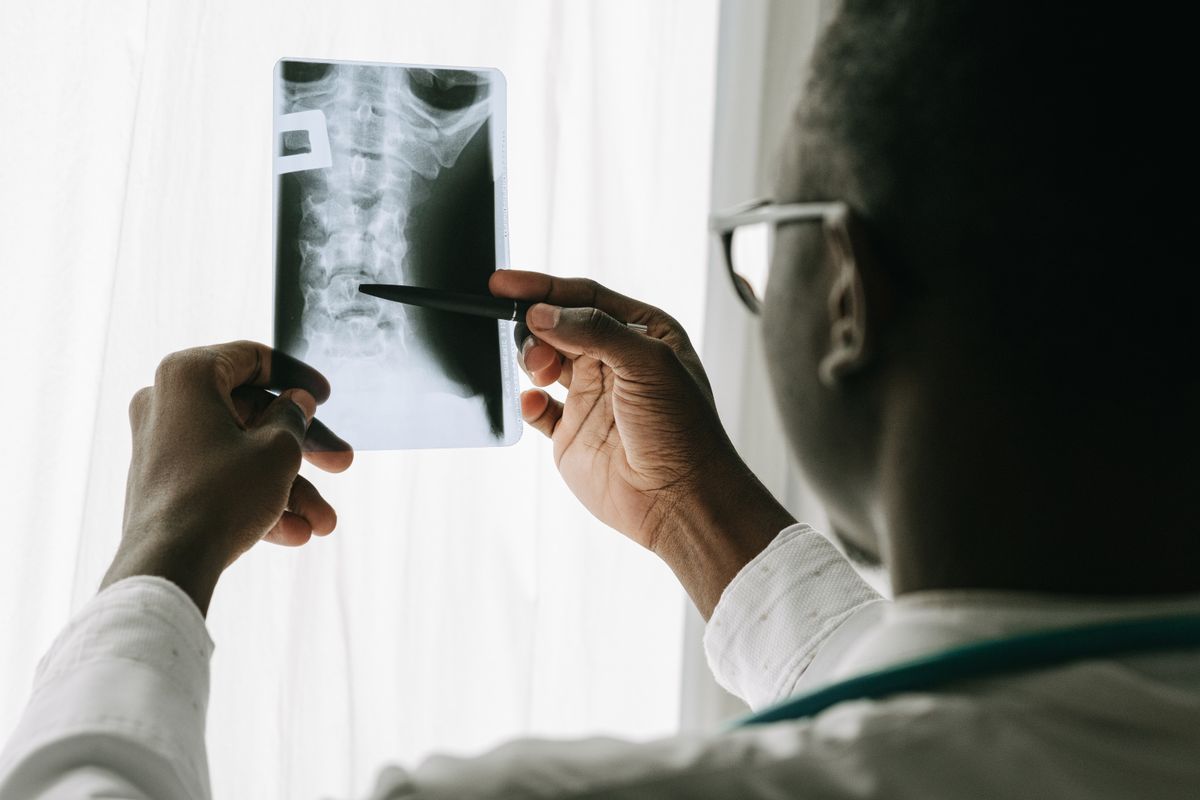
Note DN.1.18 tells doctors to specify the reason for items 12306, 12312 and 12315. Item 12312 cannot rest on steroid use that has already stopped. Body composition, or a lateral vertebral assessment on its own, sits outside these items. Healthy Bones Australia notes that an MBS rebate is not available for vertebral fracture assessment (VFA or LVA). "Other bone tests available in some pharmacies or shopping centres, such as Heel Ultrasound, are not the recommended standard test to measure bone strength," it warns. A standard plain X-ray is the wrong tool for early diagnosis. Better Health Channel says standard X-rays "can only detect osteoporosis when around one-third of the bone mass has already gone."
If no item applies and your doctor still wants a baseline reading, you can pay the private fee. Healthy Bones Australia says: "Where rebates do not apply, patients with other risk factors can pay directly for a bone density scan."
Getting a referral that will be accepted
Ask your GP to write the MBS indication clearly. Useful wording includes "aged 70 years or over, first bone densitometry," "monitoring of low bone mineral density proven by DXA on [date]," or "oral prednisolone 7.5 mg daily, anticipated duration at least 4 months." Bring previous DXA reports. "More accurate assessment of BMD is obtained when the measurements are repeated at the same location and on the same machine," Inside Radiology says. Better Health Channel agrees.
Healthdirect says scans are available through radiology practices, public hospitals and some specialist rooms, and that "some rural areas have a mobile bone density testing service." If you have a referral and live in Sydney, you can book bone densitometry (DEXA) at Vision XRAY Group. Ask whether that site bulk bills your item, and whether LVA costs extra.
"Bone densitometry services are available on the basis of referral by a medical practitioner to a specialist or consultant physician," note DN.1.18 says. Before you leave the GP, check that the indication is written down, that you know whether bulk billing is likely, and that you have a plan to discuss the report. Medicines, calcium, vitamin D and exercise are decisions for the referring doctor.
The takeaway
If you are 70 or over, or you have a listed fracture, condition, medicine or hormone finding, ask your GP for a DXA referral that names the matching MBS item. Confirm the fee, and try to return to the same machine later. If you are younger and your doctor still wants a baseline reading, budget around $160 to $165 at the Sydney clinics quoted above, and ask about concession rates. A heel ultrasound or a plain X-ray will not answer the same question.
Sources
- Medicare Benefits Schedule, "Item 12320", fees updated 1 July 2026, accessed 18 November 2026, https://www9.health.gov.au/mbs/fullDisplay.cfm?q=12320&qt=item&type=item
- Medicare Benefits Schedule, "Item 12306" and explanatory note DN.1.18, fees updated 1 July 2026, accessed 18 November 2026, https://www9.health.gov.au/mbs/fullDisplay.cfm?q=12306&type=item
- Medicare Benefits Schedule, "Item 12321", fees updated 1 July 2026, accessed 18 November 2026, https://www9.health.gov.au/mbs/fullDisplay.cfm?q=12321&qt=item&type=item
- Medicare Benefits Schedule, "Item 12315", fees updated 1 July 2026, accessed 18 November 2026, https://www9.health.gov.au/mbs/fullDisplay.cfm?q=12315&qt=ItemID&type=item
- Healthdirect, "Bone density scan (DEXA or DXA scan)", last reviewed March 2025, accessed 18 November 2026, https://www.healthdirect.gov.au/procedures/diagnostic-tests-and-scans/bone-density-scan
- Healthy Bones Australia, "Diagnosis", accessed 18 November 2026, https://healthybonesaustralia.org.au/osteoporosis-you/diagnosis/
- Inside Radiology, Royal Australian and New Zealand College of Radiologists, "Bone Mineral Density Scan (Bone Densitometry or DXA Scan)", accessed 18 November 2026, https://www.insideradiology.com.au/bone-mineral-density-scan/
- Better Health Channel, "Bone density testing", accessed 18 November 2026, https://www.betterhealth.vic.gov.au/health/conditionsandtreatments/bone-density-testing
- Australian Bureau of Statistics, "Health conditions prevalence, 2022", accessed 18 November 2026, https://www.abs.gov.au/statistics/health/health-conditions-and-risks/health-conditions-prevalence/latest-release
- The Royal Australian College of General Practitioners and Healthy Bones Australia, "2024 guideline for osteoporosis management and fracture prevention in postmenopausal women and men over 50 years of age", Medical Journal of Australia, 2025, accessed 18 November 2026, https://www.mja.com.au/journal/2025/222/9/2024-royal-australian-college-general-practitioners-and-healthy-bones-australia
- JW Nuclear Medicine, "Scan details / fees", fees as of 1 July 2026, accessed 18 November 2026, https://www.jwdensitometry.com.au/scan-details-fees
- Chatswood Densitometry, "Scan details / fees", fees as of July 2026, accessed 18 November 2026, https://www.chatswooddensitometry.com.au/scan-details-fees