Healthdirect advises a dental check-up every 6 to 12 months, starting from 12 months of age or when a baby's first teeth appear. In 2024-25 only 53.9% of Australians aged 15 and over actually saw a dental professional, according to the ABS Patient Experiences survey, and attendance fell to 46.9% among 25-34 year olds. The right gap between visits depends on age and risk, not on a single calendar habit, and your dental practitioner should set it.
What to know first
For most children and adults, a check-up every 6 to 12 months is the national starting point. Medibank Members' Choice Advantage dentist Dr Jonathan Cichero, writing in July 2026, said that "twice a year for an examination and a clean of the teeth and gums is appropriate for the majority of the population." He also stressed that "every patient and every mouth is individual," and that medical history, home care and existing dental work can shorten or lengthen that gap.
A baby's first visit should not wait until school. Healthdirect says professional checks should start "from 12 months of age or when a baby's first teeth appear." After that, ADA NSW material cited by Medibank advises that toddlers and young children be seen every 6 months, or at least every 12 months, while they are growing.
Only about half of adults keep to anything like that schedule. The ABS found that 25.2% of people who needed to see a dental professional in 2024-25 delayed or did not go, the lowest share in five years, and that 16% named cost as a barrier. Attendance also splits sharply by postcode: 65% of people in the least disadvantaged areas saw a dental professional, against 42% in the most disadvantaged areas.
| Life stage or risk | Starting interval | Who says so |
|---|---|---|
| First visit | 12 months of age, or when the first tooth appears | Healthdirect; ADA NSW, cited by Medibank, July 2026 |
| Toddlers and young children | Every 6 months, or at least every 12 months while growing | ADA NSW, cited by Medibank, July 2026 |
| Most children and adults | Every 6 to 12 months | Healthdirect |
| Typical low-risk adult | About twice a year, unless the dentist sets a longer gap | Dr Jonathan Cichero, Medibank, July 2026 |
| Higher risk (diabetes, dry mouth, smoking or vaping, complex dental work) | More frequent than the usual 6 to 12 months, as advised | Dr Cichero, Medibank, July 2026 |
Source: Healthdirect, "Dental check-up"; Medibank, "How often should you get your teeth cleaned?", 29 July 2026. Your own interval is set by a registered dental practitioner.

How often should each age group go?
Age changes the risk, even before medical problems enter the picture. New teeth, orthodontic appliances, medicines that dry the mouth, and later-life gum recession all alter how quickly decay or gum disease can run. That is why a 3-year-old, a 30-year-old and an 80-year-old should not be given the same recall date as a matter of course.
Babies and preschoolers need an early baseline so a practitioner can watch enamel as it forms, check feeding and bottle habits, and apply fluoride or fissure sealants if needed. School-age children still have mixed dentition for years, which leaves uneven surfaces that trap plaque. Teenagers may be in braces, which CDBS does not cover, and they often snack more independently.
Among adults, the 25-34 age group is the one that drifts away. Only 46.9% saw a dental professional in 2024-25, the lowest share of any group the ABS published, compared with 59.7% of 65-74 year olds. People aged 85 and over dropped back to 49.4%, even though this is a stage when dry mouth, root decay, dentures and medical complexity are more common. A long gap at either end of adult life is a poor match for the risk.
Women were more likely to attend than men (57.6% against 50.0%). That gap is worth noticing if you are the person in the household who books the children but postpones your own visit.
What actually happens at a check-up?
A check-up is more than a polish. Healthdirect describes a thorough examination of the teeth, gums, lips, tongue, mouth and saliva, usually carried out by a dentist, dental hygienist, oral health therapist or dental therapist. The practitioner will also show you how to prevent decay and gum disease. Healthdirect lists oral cancer screening, and a check of existing fillings, among the reasons to go even when you feel well.
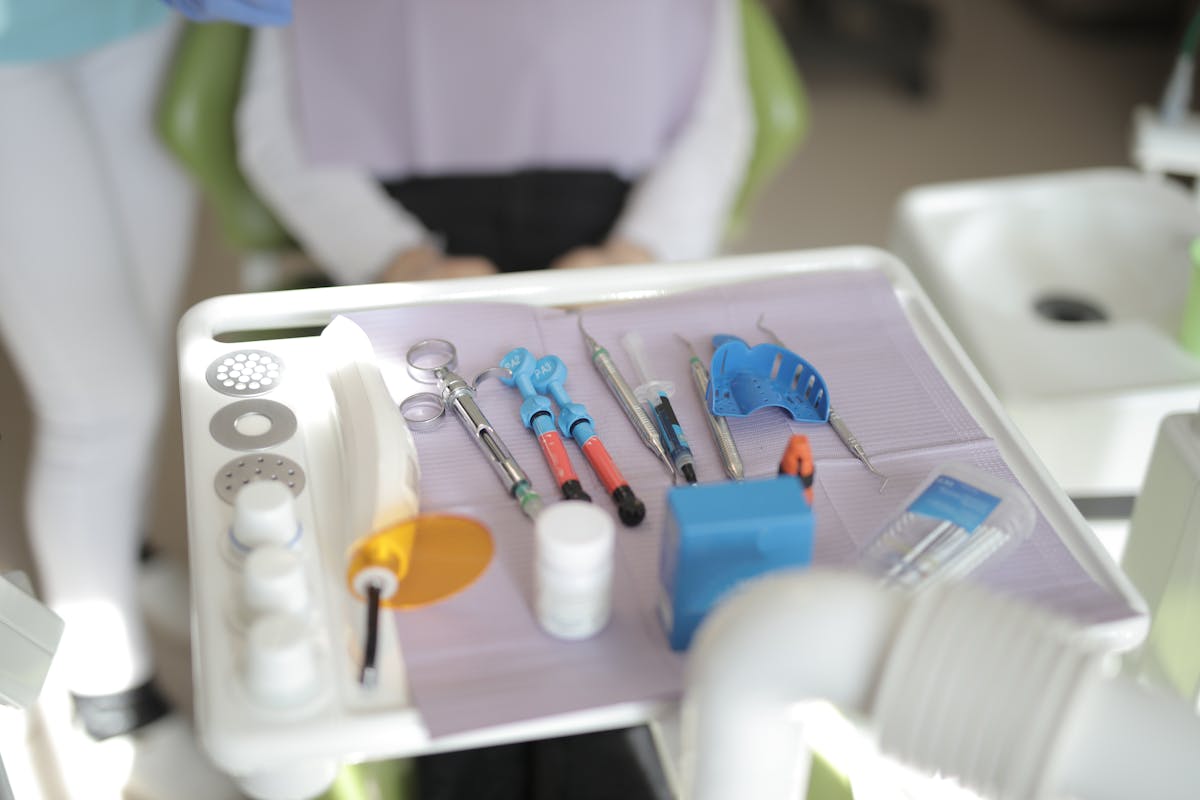
Dr Cichero's description of a typical clean is a useful walk-through. After a review of the whole mouth, X-rays may be taken to look for problems that are not visible. Each tooth is checked for wear, fractures or decay. Hardened calculus is then removed, often with a vibrating, water-cooled scaler, sometimes followed by finer hand instruments, a polish and a fluoride application. You cannot remove tartar safely at home once it has hardened.
X-rays are not automatic at every visit. They depend on your history, how long it has been, and what the practitioner can already see. If you are asked about medicines, smoking, vaping, diabetes or a dry mouth, that is part of setting the next recall, not small talk.
Babies, children and the Child Dental Benefits Schedule
The first visit is often shorter than parents expect. It is a chance for the child to sit in the chair, and for the practitioner to look at emerging teeth and talk through brushing, bottles and snacks. Waiting until there is a hole, or until the adult teeth appear, misses the years when prevention is cheapest.
For eligible families, cost need not be the reason that visit is delayed. The Child Dental Benefits Schedule covers up to $1,158 for each eligible child over two consecutive calendar years for basic dental services. That cap is indexed on 1 January. Services Australia lists check-ups, X-rays, cleaning, fissure sealing, fillings, root canals and extractions as covered. Orthodontics, cosmetic work and hospital dental services are not.
A child can get CDBS when they are eligible for Medicare, they are aged 0 to 17 for at least one day that calendar year, and you or they receive an eligible payment at least once that year, according to Services Australia (page updated 15 April 2026). You do not apply. If the child is eligible, a letter is sent. Healthdirect says you can also check a Medicare online account through myGov, or call Medicare on 132 011.
The two-year cap is not the same thing as a clinical recall. A family can spend the full $1,158 in the first year and have nothing left in the second. Item and time limits also apply at the dentist, so ask what can be claimed before the appointment. If funds remain unused at the end of the two years, or once the child is no longer eligible, they lapse.
Who needs to go more often?
Risk, not toughness, should drive a shorter interval. Dr Cichero told Medibank that people with diabetes, people who smoke or vape, people with a dry mouth, and people with dentures, crowns or veneers may need more frequent cleaning and review, because "all of these conditions can cause changes to your mouth in a very short time." He singled out smoking and vaping for drying the mouth, which lets bacteria flourish and raises the risk of decay and gum disease, and warned that expensive crowns, veneers and implants can fail without both home care and professional maintenance.
A specific gum diagnosis, a recent course of fillings, or a medicine that reduces saliva can also pull the next visit forward. Penrith Dental Clinic, like many private practices, tells patients with "a specific dental condition that needs special care" that they "might have to visit the dentist even more frequently," with the timing set at the first consultation.
If you are already in that higher-risk group, twice a year is a floor, not a target to beat. Ask the practitioner to write the recall in months, and to say whether a hygienist visit in between dentist examinations is enough.

How often Australians actually go
Recommended intervals only matter if people can get there. The ABS Patient Experiences survey for 2024-25, released on 18 November 2025, is the most recent national picture for people aged 15 and over living in private dwellings.
| Age group | Saw a dental professional in the previous 12 months |
|---|---|
| 15-24 years | 54.4% |
| 25-34 years | 46.9% |
| 35-44 years | 50.6% |
| 45-54 years | 55.3% |
| 55-64 years | 59.3% |
| 65-74 years | 59.7% |
| 75-84 years | 56.7% |
| 85 years and over | 49.4% |
| All people 15 and over | 53.9% |
Source: ABS, Patient Experiences, 2024-25, Table "Proportion of people 15 years and over, use of selected health services in the last 12 months." Dental professionals include dentists, dental hygienists and dental specialists.
The pattern is awkward for prevention. The years when many people are paying a mortgage, raising children and assuming their teeth will wait are the years with the lowest attendance. Attendance then rises through late working life, before slipping again after 85, just as dry mouth, root surfaces and medical complexity become more common.
Cost and postcode still shape who goes. The ABS said 16% of people considered cost a barrier to seeing a dental professional in 2024-25, and that 25.2% delayed or skipped a needed dental visit, down from 32.7% in 2021-22. The 65% versus 42% split between the least and most disadvantaged areas is wider than the gap between any two adult age groups in the table above. A six-monthly recall is of little use if the fee, the wait, or the trip is the real limit.
What a check-up costs, and who pays
Most adult check-ups in private clinics are not covered by Medicare, Healthdirect notes. Private extras cover can repay some general dental fees, but you need to check annual limits, waiting periods and whether the dentist is in the fund's network. Public dental care is available, often for concession card holders, "but there may be long waiting lists to see a public dentist."
Prices move with what is included. Medibank, in July 2026, put the national average check-up and clean at a Members' Choice Advantage dentist at $270, or about $540 if you go twice a year. In November 2026, Penrith Dental Clinic was advertising a $220 first-visit package. X-rays, periodontal treatment or a longer clean will add to that. Ask whether the quote is for an examination only, or for a scale, clean and fluoride as well.
For a family in western Sydney, that private fee is the adult problem. Children's basic care can sit under CDBS if they are eligible, which is why it is worth checking the Medicare letter before you pay full fee for a child's examination. If you are looking for a periodic dental examination in Penrith, the clinic describes a check of the teeth, gums and other tissues, a screen for early signs of oral cancer, a review of fillings, X-rays if needed, and a discussion of hygiene, with a treatment plan afterwards.
Health funds sometimes rebate two check-ups a year at a higher rate. That rebate should follow the clinical interval, not the other way around. Going twice because the fund will pay, when your dentist has set a 12-month recall, is not required. Skipping a shorter recall your dentist has already advised, because the extras cap has run out, is a different and poorer trade.

When should you go sooner?
Do not wait for the recall card if something has changed. Dr Cichero's rule is simple: "If you notice a change, get it checked by your dentist." That includes bleeding gums, a tooth that has become sensitive or loose, a cracked filling, a sore under a denture, a patch in the mouth that has not healed, or a dry mouth after a new medicine. Healthdirect also urges you to tell the clinic if you are nervous, rather than cancelling.
A new diabetes diagnosis, starting treatment that dries the mouth, or taking up (or trying to quit) smoking or vaping are all reasons to ring and ask whether the next visit should be brought forward. So is a long gap. If it has been several years, say so when you book, because the first appointment may need more time, and possibly X-rays, than a routine six-month review.
There is no useful home substitute for the examination. Healthdirect is clear that regular professional checks sit alongside brushing and flossing, not instead of them. A check-up cannot be replaced by a whitening kit, a pharmacy mouth rinse, or a wait-and-see approach to pain.
What to do next
Book on the interval your dental practitioner sets, using 6 to 12 months as the default for most people, and sooner if you have a higher-risk mouth. Get children in at the first tooth or first birthday, and use CDBS if a Services Australia letter says they are eligible. Adults aged 25 to 34, men, people in more disadvantaged areas, and people over 85 are the groups the ABS shows are most likely to miss a year. If cost is the barrier, ask about public dental eligibility, extras limits and a written fee for the examination and clean before you delay another six months.
Sources
- Healthdirect, "Dental check-up", accessed 18 November 2026, https://www.healthdirect.gov.au/dental-check-up
- Australian Bureau of Statistics, "Patient Experiences, 2024-25 financial year", released 18 November 2025, https://www.abs.gov.au/statistics/health/health-services/patient-experiences/latest-release
- Australian Bureau of Statistics, "Fewer Australians delaying use of health services", 18 November 2025, https://www.abs.gov.au/media-centre/media-releases/fewer-australians-delaying-use-health-services
- Medibank, "How often should you get your teeth cleaned?", 29 July 2026, https://www.medibank.com.au/livebetter/dental-and-oral-health/teeth-cleaning/dental-cleaning/
- Services Australia, "What's covered by the Child Dental Benefits Schedule", accessed 18 November 2026, https://www.servicesaustralia.gov.au/whats-covered-child-dental-benefits-schedule?context=22426
- Services Australia, "Who can get the Child Dental Benefits Schedule", updated 15 April 2026, https://www.servicesaustralia.gov.au/who-can-get-child-dental-benefits-schedule?context=22426
- Penrith Dental Clinic, "Periodic Dental Examination", accessed 18 November 2026