Eyelash extensions can save time every morning and give a look mascara cannot match. They also sit right on the edge of one of the most sensitive parts of the body. Knowing what goes into a set, what can go wrong and how to care for it makes a big difference to both the result and your eye health.
What are eyelash extensions?
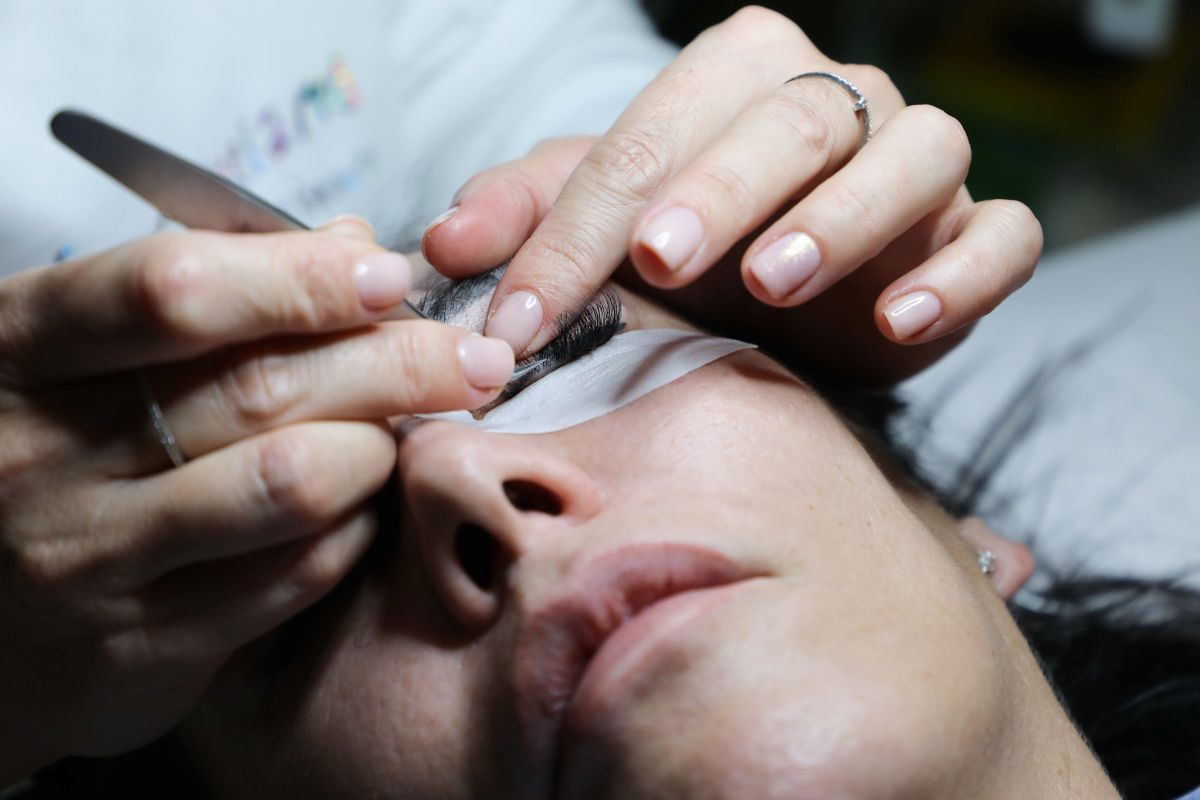
Eyelash extensions are individual fibres bonded to your natural lashes, one by one, with a semi-permanent glue. They are different from strip false lashes, which sit on the eyelid and come off the same night.
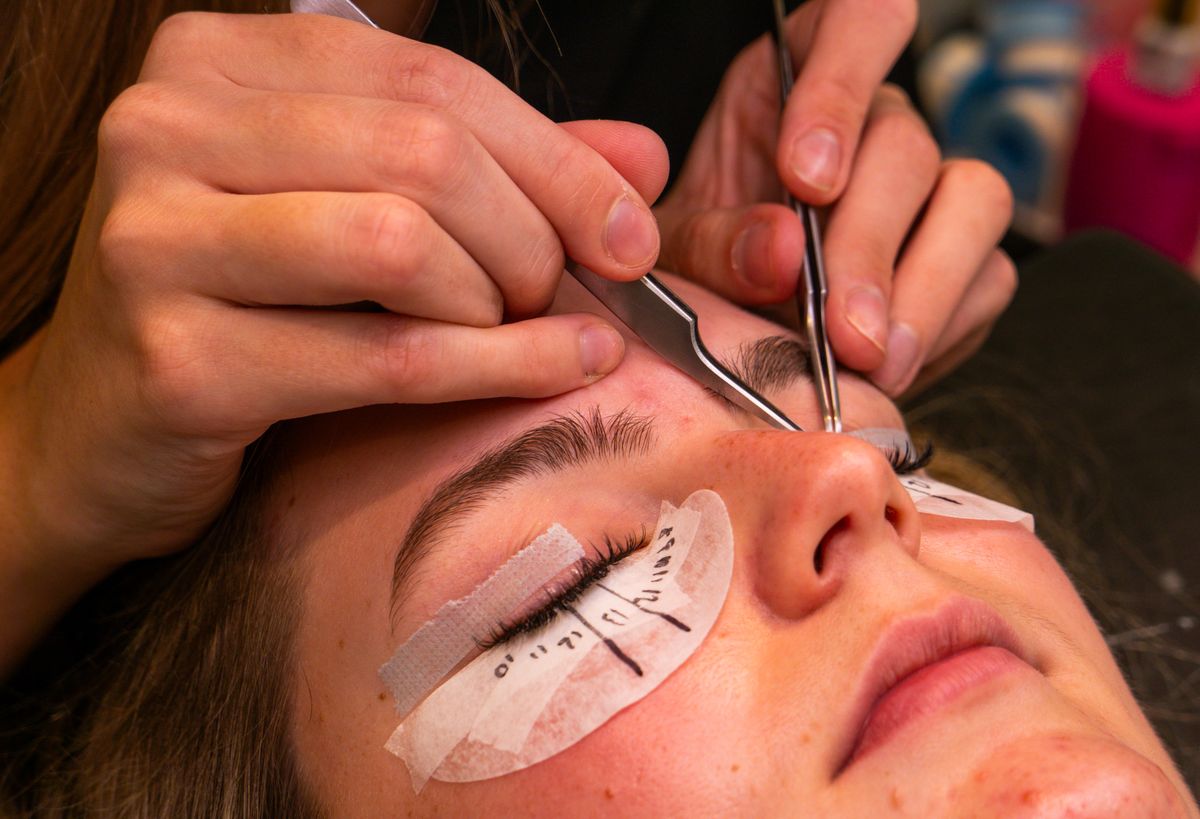
According to the American Academy of Ophthalmology, there are three types of lash fibre: synthetic, silk and mink. They come in many sizes and shapes. A technician applies them with tweezers while your eyes stay closed, and a full application can take up to two hours.
Because each extension is glued to a single natural lash, it falls out when that lash sheds. That is why extensions need regular maintenance, usually called fills or refills.
A fill is shorter than a full set. The technician removes grown out extensions and adds new ones where lashes have shed. If you leave it too long, most of the set will be gone, and you may need a full set again. Ask your salon how long a gap they accept before a fill becomes a new set.
Types of eyelash extension sets
Salon menus usually describe sets by how many extensions go on each natural lash. The names are fairly standard, though exact numbers vary between brands and trainers.
| Style | Extensions per natural lash | Typical fibre thickness | Look |
|---|---|---|---|
| Classic | 1 (often called 1:1) | 0.10 to 0.20 mm | Natural, like good mascara |
| Hybrid | A mix of classic singles and volume fans, often about half and half | Both ranges | Textured and balanced |
| Volume | A fan of 2 to 6 (2D to 6D) | 0.05 to 0.07 mm | Full and fluffy |
| Mega volume | A fan of 10 to 16 or more | 0.03 to 0.05 mm | Very dense and dark |
Source: The Studio, Classic vs volume vs hybrid lashes, citing Lash Affair.
A common worry is that volume lashes must be heavier. Not necessarily. Volume fans use much finer fibres, so a small fan can carry less material than one thick classic extension. What matters is the combination of fan size and fibre thickness on each natural lash.
Length and curl also change the look. The Studio notes that thicker fibres add weight and stress to each natural lash, and that a responsible technician matches fibre thickness to lash strength. Ask your technician to explain what they plan to use and why, rather than simply choosing the most dramatic option. If your lashes are fine or short, say so at the start. It is better to build up over a few visits than to overload weak lashes in one go.
Which style suits you?
- Classic suits people with healthy, reasonably dense natural lashes who want a subtle result.
- Volume can make sparse lashes look fuller, because each natural lash carries several fibres.
- Hybrid gives a technician flexibility to use singles on weaker lashes and fans where you want more fullness.
CHOICE also notes that softer, lighter fibres put less tension on the hair follicle, and suggests thinking twice about extensions if you already have sparse lashes.
How long a set lasts
The American Academy of Ophthalmology says extensions typically last three to four weeks, falling off as your natural lashes shed. Lash supplier guides describe extensions growing out with the natural lash over roughly four to six weeks. EyeWiki, the Academy's clinical wiki, says repeat applications usually happen every two to three weeks as needed.
In practice, that means:
| Time after application | What to expect |
|---|---|
| First few hours | Glue is still setting; EyeWiki notes it may take up to six hours to fully solidify |
| Weeks 1 to 2 | Some extensions shed naturally with their natural lash |
| Weeks 2 to 3 | Gaps become visible; a common time for a fill |
| Weeks 3 to 4 | Many extensions have shed, according to the American Academy of Ophthalmology |
Source: American Academy of Ophthalmology, Eyelash Extension Facts and Safety; EyeWiki, Eyelash Extensions.
How long your set lasts also depends on your own lash cycle, your aftercare and the skill of the technician. A set that falls out within days points to an application or adhesive problem, not normal shedding.
CHOICE described one member who lost almost all her extensions within three days, despite following the aftercare steps. If that happens, go back to the salon quickly. CHOICE notes that you have rights under the Australian Consumer Law, and you can contact your state Fair Trading office if the salon will not help.
What are the risks?
Most people who get extensions have no serious problems, but eye specialists have documented a range of complications.
The clearest data comes from a Japanese study by Amano and colleagues, published as an abstract in Investigative Ophthalmology and Visual Science. They reviewed 121 women aged 21 to 52 who visited eye clinics with symptoms after eyelash extensions between 2007 and 2011. They found:
- keratoconjunctivitis, caused by glue or removing agents getting into the eye, in 69 patients
- contact blepharitis, inflammation of the eyelid from the glue, in 48 patients
- conjunctival erosion from eyelid fixing tapes in 6 patients
- allergic blepharitis from fixing tapes in 1 patient
- bleeding under the conjunctiva from pressure during removal in 1 patient.
Four patients had both keratoconjunctivitis and blepharitis. All 121 recovered with eye drops or ointments. The researchers also tested three glues and found formaldehyde above the standard threshold in all of them.
The EyeWiki entry on eyelash extensions adds traction alopecia, where natural lashes are lost because of the pull of the synthetic lashes. It notes that allergic symptoms may not start until hours or days after the appointment, and that glue can reach the eye during the procedure or afterwards.
The American Academy of Ophthalmology lists the main risks as trauma to or infection of the eyelid or cornea, allergic reaction to the glue, and temporary or permanent loss of lashes. It also warns that rubbing, tugging or pulling can break natural lashes and damage the follicle.
Who should take extra care
EyeWiki advises that people with existing eye disease or a history of allergy should avoid eyelash extensions, and suggests mascara used properly as a safer alternative. CHOICE also suggests thinking twice if you:
- already have sparse lashes
- cannot afford the time or money for regular maintenance
- have known allergies to an ingredient in the adhesive or are prone to allergies
- are pregnant.
If you wear contact lenses, have dry eyes or have had eye surgery, it is worth asking your optometrist before booking.
It also helps to give your lashes a break if they look thin, short or patchy. EyeWiki notes that the pull of synthetic lashes can cause natural lashes to fall out. A lighter classic set, or a few weeks with no extensions at all, can be a sensible reset. Tell your technician about any past reactions, even mild ones, before each new set.
How to choose a lash technician
When CHOICE investigated in 2014, it reported that there were no training requirements for eyelash technicians in Australia. Check the current position with your state, but either way, it pays to ask questions before you lie down in the chair.
The American Academy of Ophthalmology suggests checking:
- Reputation and hygiene. How long has the salon been operating? Is it clean? Read reviews and look at before and after photos.
- Training and experience. Ask what training and experience the technician has in lash extensions specifically.
- The glue. Ask for the ingredient list, check it for allergens and confirm it is not past its expiry date.
- A spot test. Ask for a test on the inside of your wrist before glue goes near your eyes.
CHOICE adds a few more checks: look at the products and their labels, ask whether the adhesive is made for the eye area, check that a fan is used to keep fumes away from your eyes, and consider an allergy test first. It also suggested looking for technicians with a nationally recognised beauty qualification, because these cover infection control and managing adverse effects.
A dedicated lash studio such as Lash Blossom can talk you through styles, products and patch testing at a consultation, which is a good chance to ask all of these questions before you commit.
Eyelash extensions aftercare
Good aftercare protects both the extensions and your natural lashes. Your technician's instructions come first, because products and techniques vary. These points come from eye health sources.
The first day
- Keep water away from your lashes for the first few hours. EyeWiki notes that glue may take up to six hours to set completely, and advises against washing your face in that window.
- Avoid rubbing your eyes, even if they feel a little strange at first.
Every day after that
- Do not rub, tug or pull your extensions. The American Academy of Ophthalmology warns this can fracture natural lashes and damage the follicle.
- Check with your technician before swimming or using mascara on your extensions, as CHOICE notes that advice varies depending on the procedure.
- Brush lashes gently if your technician recommends it, and be careful with oily products around the eyes if your technician advises against them.
- Clean the lash line gently as instructed, so makeup and oil do not build up.
Removal
- Never pull extensions off yourself. Have them removed by a professional. The Amano study recorded a case of bleeding under the conjunctiva from pressure during removal, and removing agents getting into the eye were one cause of keratoconjunctivitis.

When to see a doctor
Watch for pain, itching, redness, swelling, watering, discharge or any change in vision after an appointment. EyeWiki notes that a reaction can appear hours or even days later.
If you have symptoms, the American Academy of Ophthalmology is clear: do not try to remove the extensions yourself, and do not try to treat the reaction on your own, because doing it wrong can make symptoms last longer. See an eye doctor promptly. In Australia, you can see an optometrist directly, or your GP can refer you to an ophthalmologist. CHOICE also warns that an eye problem can quickly get worse, so do not wait.
What do eyelash extensions cost?
Prices vary by salon, location, style and the products used. In its 2014 investigation, CHOICE gave a rough guide of between $70 and $300 for a full set. That figure is now more than a decade old, so ask your salon for current prices for a full set and for fills. Factor in the ongoing cost of refills every few weeks, which CHOICE lists as a reason some people decide extensions are not for them.
Next steps
Eyelash extensions come in classic, hybrid and volume styles, and a set typically lasts three to four weeks before it needs a fill. The main risks come from the glue, poor hygiene and rough handling, and research has found irritation and allergic reactions in people who had extensions. Choose a trained technician, ask to see the adhesive ingredients, request a patch test, keep lashes dry for the first few hours and never rub or pull them. If your eyes react, see an eye health professional rather than removing the lashes yourself.
Sources
- American Academy of Ophthalmology, "Eyelash Extension Facts and Safety", accessed 18 November 2026, https://www.aao.org/eye-health/treatments/eyelash-extension-facts-safety
- EyeWiki, American Academy of Ophthalmology, "Eyelash Extensions", accessed 18 November 2026, https://eyewiki.aao.org/Eyelash_Extensions
- Amano Y, Sugita M, Sugimoto Y, Amano S, "Ocular Disorders Due to Eyelash Extensions", Investigative Ophthalmology and Visual Science, accessed 18 November 2026, https://iovs.arvojournals.org/article.aspx?articleid=2351799
- CHOICE, "Eyelash extension safety", Kate Browne, 2014, accessed 18 November 2026, https://www.choice.com.au/health-and-body/beauty-and-personal-care/skin-care-and-cosmetics/articles/eyelash-extensions
- The Studio, "Classic vs volume vs hybrid lashes: the real differences", accessed 18 November 2026, https://www.thestudiosupply.com/blog/classic-vs-volume-vs-hybrid-lashes/
- EyeWiki references: Amano Y, Sugimoto Y, Sugita M, "Ocular disorders due to eyelash extensions", Cornea 2012;31:121-125, accessed via EyeWiki 18 November 2026, https://eyewiki.aao.org/Eyelash_Extensions