A lash lift is the cheaper, lower maintenance option, and lash extensions give more length and drama for more money and more appointments. In the lash lift vs extensions decision, the deciding factors are the lashes you already have, how often you are willing to go back to the salon, and how your eyes cope with glue and chemicals.
What each treatment does
A lash lift is a perm for your own lashes. The technician fixes your lashes onto a small silicone shield, applies a lifting solution to curl them from the base, then a setting solution. Most salons add a tint so the lashes look darker, like a coat of mascara. Nothing is added to your lashes, so the result depends on the length and density you already have.
Lash extensions are synthetic fibres glued one at a time onto your natural lashes. The American Academy of Ophthalmology's EyeWiki describes them as synthetic fibres such as polyester, attached with glue. Because they add length and fullness, they can create a much bolder look than a lift. Styles range from a natural "classic" set, with one extension per lash, to volume sets that use fans of very fine fibres.
What happens at each appointment
A typical lash lift runs like this:
- The technician cleans your lashes to remove oil and makeup.
- Your lower lashes are covered with a pad, and a silicone shield is stuck to the upper lid.
- Your lashes are combed up onto the shield.
- A lifting solution is applied and left for a set time, then removed.
- A setting solution is applied to fix the new shape.
- A tint is applied if you have chosen one, then everything is cleaned off.
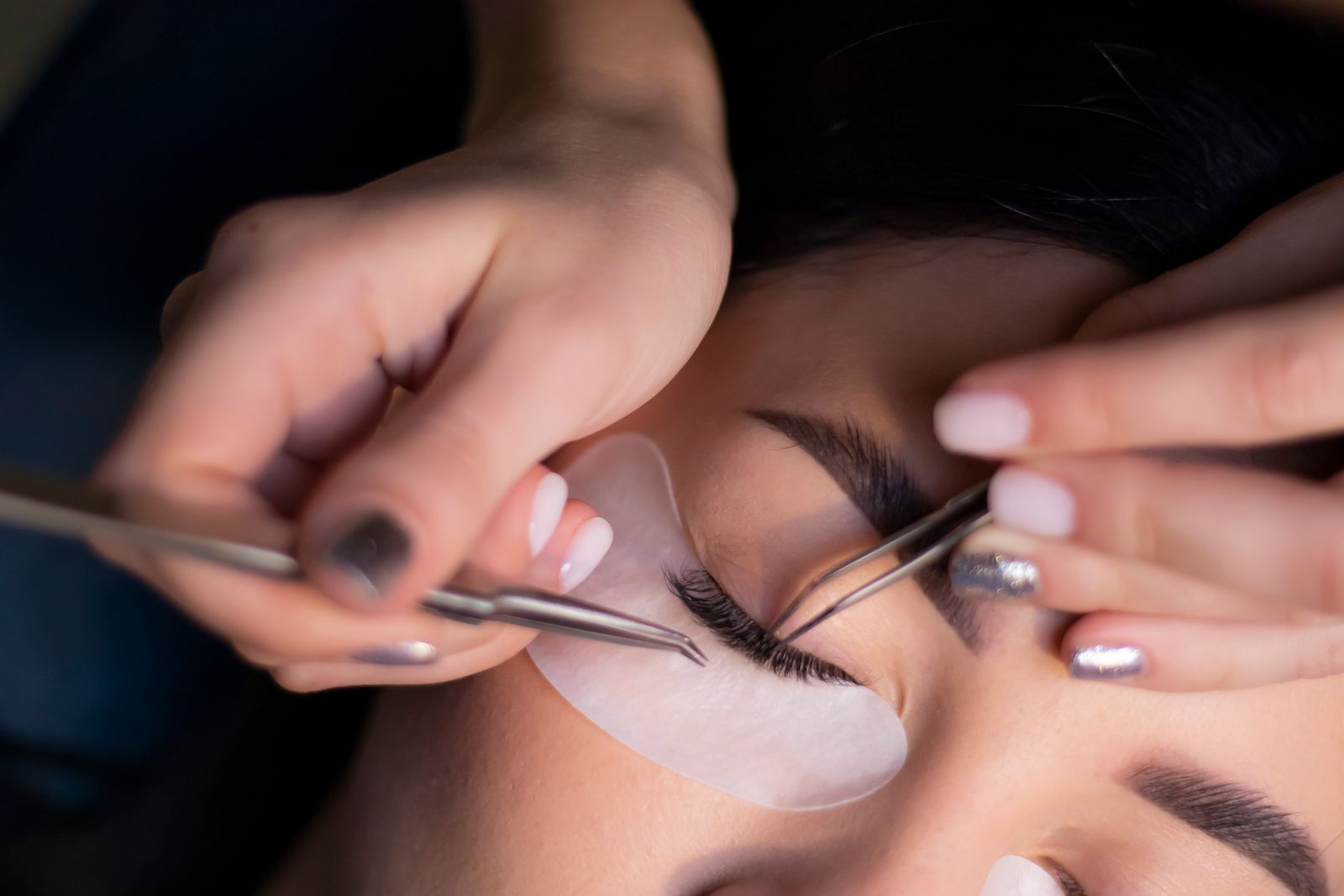
A full set of extensions takes longer. You lie back with your eyes closed while the technician isolates each natural lash with tweezers, dips an extension in glue and places it a little above the lash line. Your lower lashes are taped or padded down so they do not get glued to the upper ones. Most people find it relaxing, but you need to keep your eyes shut and still for the whole session.
Lash lift vs extensions at a glance
| Lash lift and tint | Lash extensions | |
|---|---|---|
| What it does | Curls and darkens your own lashes | Adds synthetic lashes for length, curl and volume |
| Best for | Lashes with decent length that are straight or point down | Short, fine or sparse lashes, or a dramatic look |
| How long it lasts | About 5 to 8 weeks | Lasts with your lash cycle, infills every 2 to 3 weeks |
| Appointment time | Under an hour at many salons | Usually longer for a full set |
| Main safety concerns | Lifting chemicals or tint getting into the eye | Glue fumes and allergy, lash loss from weight or pulling |
Source: Believe in Beautiful, "Lash lift vs lash extensions" (Brisbane); Lash Blossom service pages (Sydney); AAO EyeWiki, "Eyelash Extensions" (May 2026).

What does each cost in Australia?
There is no official price survey for lash treatments, so the table below uses prices published on two salons' own websites, one in Brisbane and one in Sydney. Treat them as examples, not averages.
| Treatment | Believe in Beautiful (Brisbane) | Lash Blossom (Sydney CBD) |
|---|---|---|
| Lash lift and tint | $155 | From $100 |
| Full set of classic extensions | $199 | From $160 |
| Fuller or volume set | Not listed in comparison | From $190 to $220 |
| Infill or refill | $125 up to 2 weeks, $149 up to 3 weeks | Infills must be within 4 weeks or a full set is needed |
| Eyelash tint on its own | $55 | Not listed |
| Extension removal | $60 | Not listed |
Source: Believe in Beautiful, "Lash lift vs lash extensions", and Lash Blossom, "Lash services" and "Lash infills" pages (checked November 2026).
The two month cost
Believe in Beautiful sets out its own two month comparison. A lash lift and tint, plus a tint four weeks later, comes to $210. A full set of extensions with two refills at three weeks comes to $497. Over a year, that gap grows, because extension clients keep booking refills every few weeks while lift clients return roughly every six to eight weeks.
How much upkeep does each need?
Lash lifts
A lift grows out as your lashes shed and regrow. Believe in Beautiful says its results last around 6 to 8 weeks, and Lash Blossom describes a curl that lasts up to 5 weeks. There is nothing to refill. Some people book a tint on its own between lifts to keep the colour fresh.
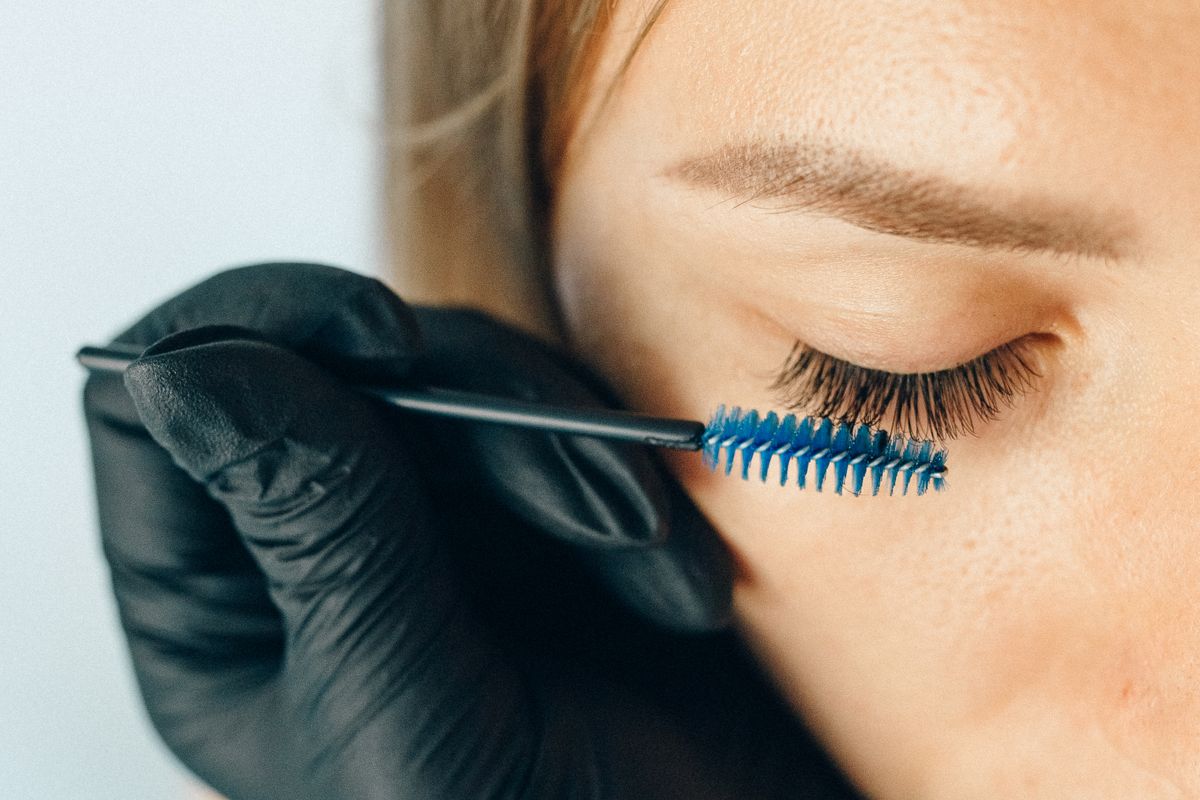
Daily care is simple. Keep lashes dry for the first 24 hours, avoid steam and saunas for 24 hours, and brush them with a clean spoolie.
Extensions
Extensions fall out with your natural lashes. Lash Blossom says its extensions can last 4 to 6 weeks depending on your growth cycle, and it recommends an infill every 2 to 3 weeks to keep them full. If you leave it longer than 4 weeks, most salons need to start again with a full set.
Aftercare matters more with extensions:
- Keep them dry for the first 24 hours.
- Use an oil free cleanser suitable for the eye area, because oils can weaken the glue.
- Brush them daily with a clean spoolie.
- Sleep on your back or use a silk pillowcase if you can.
- Never pull or pick at them. Book a professional removal instead.
EyeWiki notes that glue may take up to six hours to fully solidify, which is why salons advise against washing your face for the first few hours.

Eye safety: what the research says
Both treatments put chemicals very close to the eye, so it is worth knowing the risks before you book.
Extensions and glue
EyeWiki lists several eye problems linked to extensions: keratoconjunctivitis, allergic blepharitis, conjunctival erosion, subconjunctival haemorrhage and traction alopecia. It explains that the glue may contain chemicals such as formaldehyde, which can reach the eye during the procedure or hours later. Allergic symptoms such as redness, itching, tearing and swollen eyelids may not appear until hours or days after the appointment.
A prospective 2024 study in Contact Lens and Anterior Eye followed 32 people who had extensions applied. One hour afterwards, 27 participants, or about 84%, reported eye symptoms, most commonly a foreign body sensation. Tear film stability was lowest one week later. The authors concluded that extensions can unbalance the eye surface and cause short term corneal defects and reduced tear film stability. It was a small study, but it matches what eye specialists report.
Traction alopecia is the other concern. EyeWiki describes it as natural lashes being lost because of the pull of synthetic lashes, which may damage the follicles. Heavy or overly long extensions, and picking them off, make this more likely.
Lifts and tints
Lash lift solutions usually contain thioglycolic acid, the same type of chemical used in hair perms. A consumer fact sheet from the UK's Chartered Trading Standards Institute warns that if these chemicals reach the eye, they can cause corneal burns, severe irritation or infection that could result in lasting damage. It says poor application increases the risk, recommends a patch test for tints containing PPD, and warns that repeated lifts can weaken lashes over time. It also advises against at home lift kits.
Who should be careful
EyeWiki advises that people with existing eye disease or a history of allergy should avoid extensions, and suggests salons use allergy questionnaires or patch tests. In practice, it is worth talking to your optometrist first if you:
- Have dry eye, blepharitis or recurrent eye infections
- Wear contact lenses and often have irritated eyes
- Have reacted to hair dye, nail glue or cosmetics before
- Have had recent eye surgery
Lowering your risk
You cannot remove every risk, but you can reduce it. Ask for a patch test before your first lift, tint or set of extensions, and wait the time your salon recommends before the full treatment. Keep your eyes firmly closed during the appointment and tell the technician straight away if anything stings or burns. Choose a lighter, shorter set of extensions if your natural lashes are fine. Give your lashes a break if they look thin or patchy, and avoid at home lift kits, which the Trading Standards fact sheet warns against.
Switching between the two
Yes, and many people do. Believe in Beautiful suggests one approach: extensions for a holiday, wedding or special event, and a lash lift for everyday life. The order matters, though. A lift works on your bare natural lashes, so extensions need to be fully removed first, ideally by a professional using a proper remover rather than by picking them off.
If your lashes look thin after a long run of extensions, a break of a few weeks lets them recover before you decide what to do next. A tint on its own is a gentle middle option for fair lashes. Believe in Beautiful notes that even a tint alone can give more definition without mascara.
How to choose a salon
A careful technician lowers the risk with either treatment. Before you book, ask:
- What training do you have, and how long have you been doing lifts or extensions?
- Do you do a patch test, and how far ahead of the appointment?
- Which glue or lift solution do you use, and can I see the ingredients?
- How do you keep tools and pads clean between clients?
- What weight and length do you recommend for my lashes?
- What should I do if my eyes react after I leave?
A good salon will talk you through the options at a consultation. Sydney CBD studio Lash Blossom, for example, offers a consultation before the appointment to match length and curl to your natural lashes. That kind of conversation is a useful benchmark wherever you book.
Warning signs after a treatment
Mild watering or a gritty feeling for a short time after extensions is common. These signs are not, and need attention:
| Symptom | What it may mean | What to do |
|---|---|---|
| Red, itchy, swollen eyelids hours or days later | Allergic reaction to glue or tint | See a GP, pharmacist or optometrist |
| Eye pain or blurred vision | Corneal injury or chemical exposure | See a doctor or optometrist straight away |
| Sudden red patch on the white of the eye | Subconjunctival haemorrhage | See an optometrist to check for other causes |
| Patchy gaps in your natural lashes | Traction alopecia | Remove extensions professionally and give lashes a break |
Source: AAO EyeWiki, "Eyelash Extensions" (May 2026), and healthdirect, "Conjunctivitis" (checked November 2026).
Healthdirect advises seeing a doctor or optometrist straight away for eye pain or vision loss. If solution gets into your eye during a lift, rinse with plenty of clean water and get medical advice.
Next steps
Choose a lash lift if your lashes already have some length and you want a natural look with little upkeep for around $100 to $155 every month or two. Choose extensions if you want length and volume your own lashes cannot give you, and you are happy to pay for a full set and infills every 2 to 3 weeks. Either way, book a trained technician, ask for a patch test, follow the aftercare and see a doctor or optometrist quickly if your eyes hurt or your vision changes.
Sources
- American Academy of Ophthalmology EyeWiki, "Eyelash Extensions", updated 10 May 2026, accessed 18 November 2026, https://eyewiki.aao.org/Eyelash_Extensions
- Han J, et al., "The effects of eyelash extensions on the ocular surface", Contact Lens and Anterior Eye, 2024, accessed 18 November 2026, https://pubmed.ncbi.nlm.nih.gov/38171996/
- Chartered Trading Standards Institute, "Keep an eye on safety: lash lifts and tints" fact sheet, accessed 18 November 2026, https://www.tradingstandards.uk/media/3181562/lashliftstints_factsheet-final.pdf
- healthdirect, "Conjunctivitis", accessed 18 November 2026, https://www.healthdirect.gov.au/conjunctivitis
- Believe in Beautiful, "Lash lift vs lash extensions: which is right for you?", accessed 18 November 2026
- Lash Blossom, "Lash services", accessed 18 November 2026
- Lash Blossom, "Lash infills", accessed 18 November 2026